Last updated: May 2026 · Jake Morrison · 5 years in Vietnam
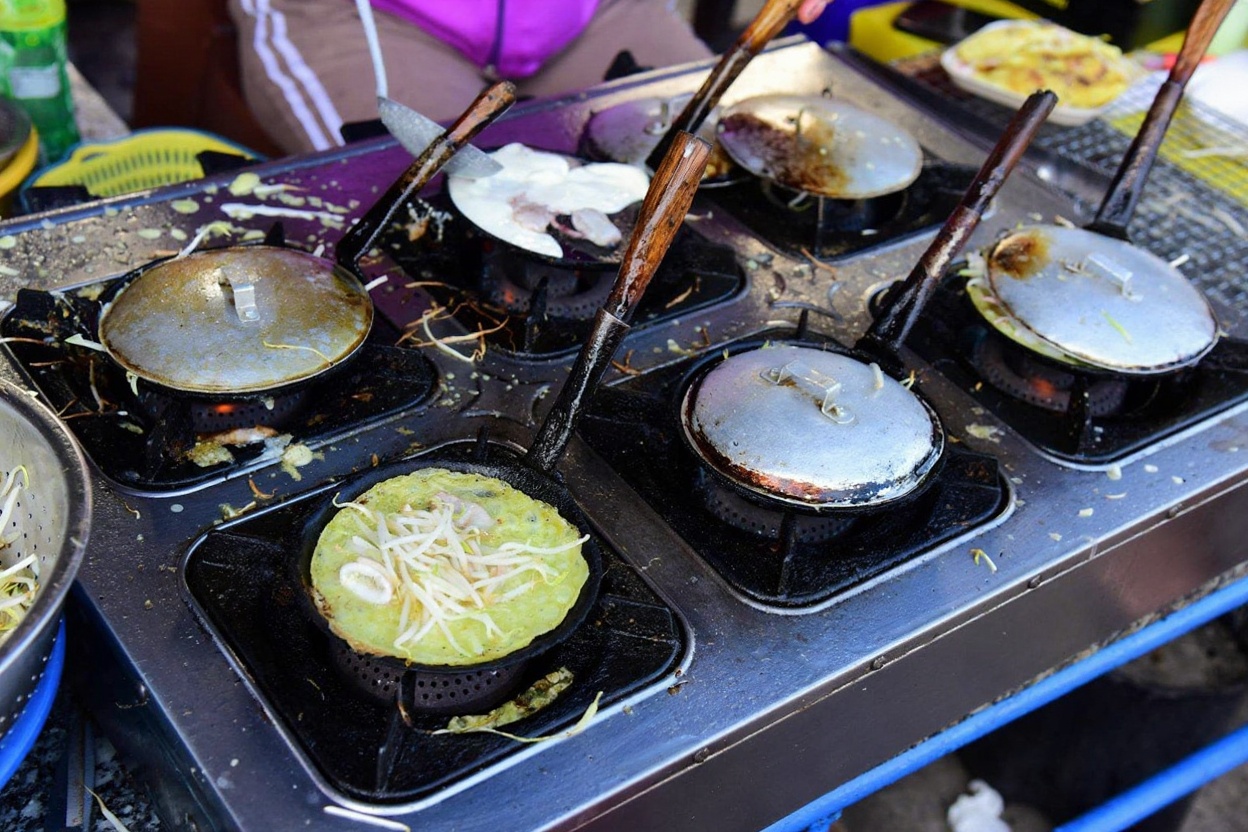
I spent a week in Quy Nhon the first time and ate better than I did in three weeks in Hoi An. That’s not a slight on Hoi An — it’s a statement about what happens when a city’s food scene hasn’t been calibrated for foreign tourists yet.
No “Authentic Vietnamese Cooking Class Experience.” No laminated menus with photos. Prices in Vietnamese only. The woman running the bún cá stall on Tang Bat Ho Street has been cooking the same soup for twenty years and has no interest in explaining it in English. You point, you pay 30,000 VND, and you eat what she puts in front of you.
That’s the Quy Nhon food experience. Here’s what to order.
The Dishes — What Quy Nhon Is Actually Known For
Quy Nhon sits in Binh Dinh province, which has its own food identity distinct from the Hue influence in the north and the Saigon-style cooking further south. The dishes here are lighter than Hue, less sweet than Saigon, and more seafood-forward than both.
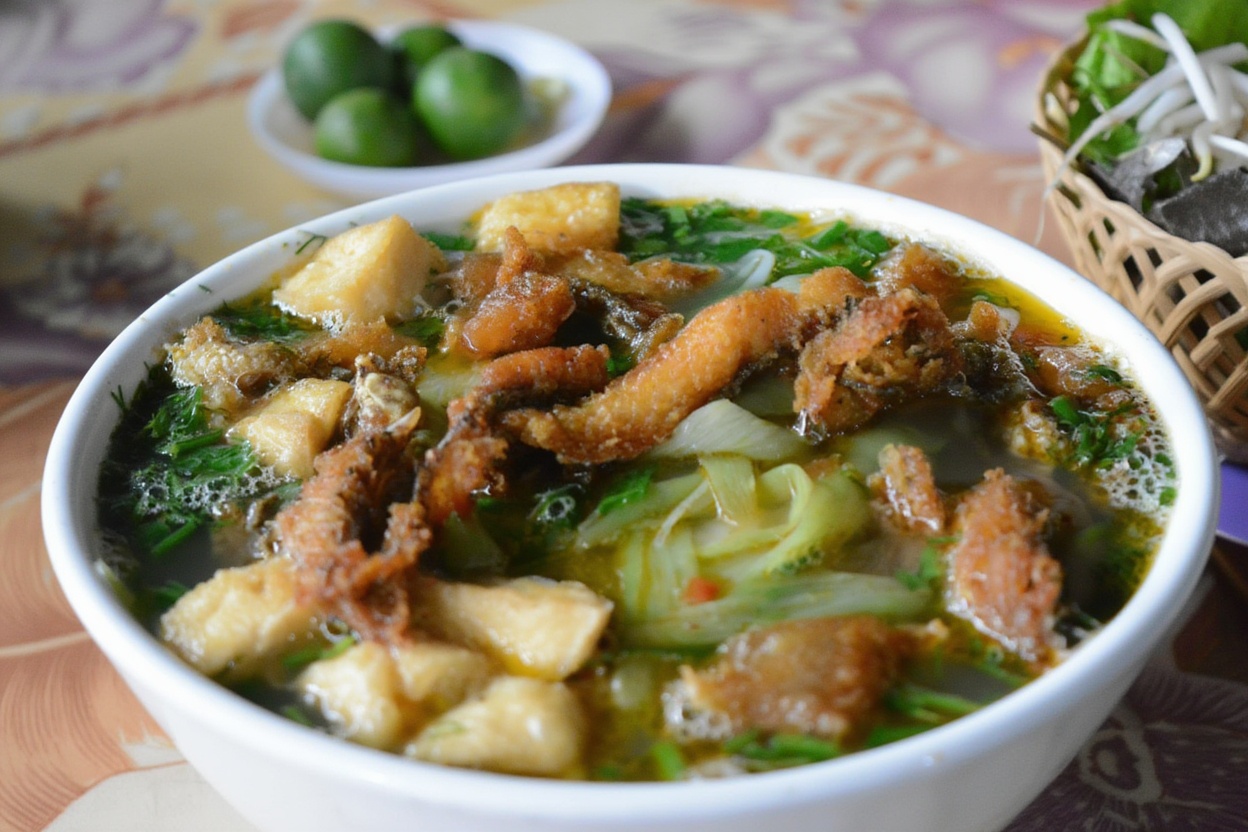
Bánh xèo tôm nhảy (say: bahn say-oh tom nyay) — “jumping shrimp pancakes.” The name comes from the live shrimp dropped onto a sizzling rice-flour pancake mid-cook. The shrimp curl and jump in the oil before settling into the crispy batter. You eat them by wrapping small pieces of the pancake with fresh herbs and rice paper, then dipping in nuoc cham. The version here is smaller and crispier than the Hoi An bánh xèo — more snack than meal.
✓Quick Answer
The best bánh xèo tôm nhảy in Quy Nhon is at Banh Xeo Tom Nhay Rau Mam, 91 Dong Da Street. Cost: 50,000 VND (~$1.90) per portion. Order two — one portion is a starter. Open from late morning to evening.
Bún cá (say: boon ca) — fish noodle soup. The Quy Nhon version uses a clear, slightly sweet fish broth (not the heavy fermented shrimp paste base used in Hue’s bún bò), glass noodles rather than rice noodles, and fish cakes that are pounded and shaped here rather than bought from a factory. The texture is lighter than you’d expect. It’s a breakfast dish primarily but stalls serve it all morning.
Nem nướng (say: nem nyoong) — grilled pork sausage. Eaten wrapped in rice paper with herbs, cucumber, green banana, and star fruit if you can find it. The dipping sauce is a reduced pork broth with peanuts and some heat. Every food stall on Ngo Van So has a version. The standard price is 30,000–45,000 VND (~$1.15–1.70) for a plate.
Bánh canh ghẹ (say: bahn cahn gay) — thick rice noodle soup with crab. The noodles are fat and slightly chewy, the broth is crab-based and orange with a faint sweetness, and the crab is local blue swimmer crab from the fleet. It’s the dish locals point to when asked what makes Quy Nhon cooking distinct. Harder to find than bún cá — ask at the guesthouse for a current recommendation.
Fresh seafood — grilled, steamed, or stir-fried at any of the coastal restaurants. The fishing fleet operating out of Quy Nhon and Bai Xep means the supply chain between sea and table is genuinely short. A seafood meal at a local restaurant near the promenade runs 250,000 VND (~$9.50) per person and includes 2–3 dishes.
Ngo Van So Food Street — The Essential Evening
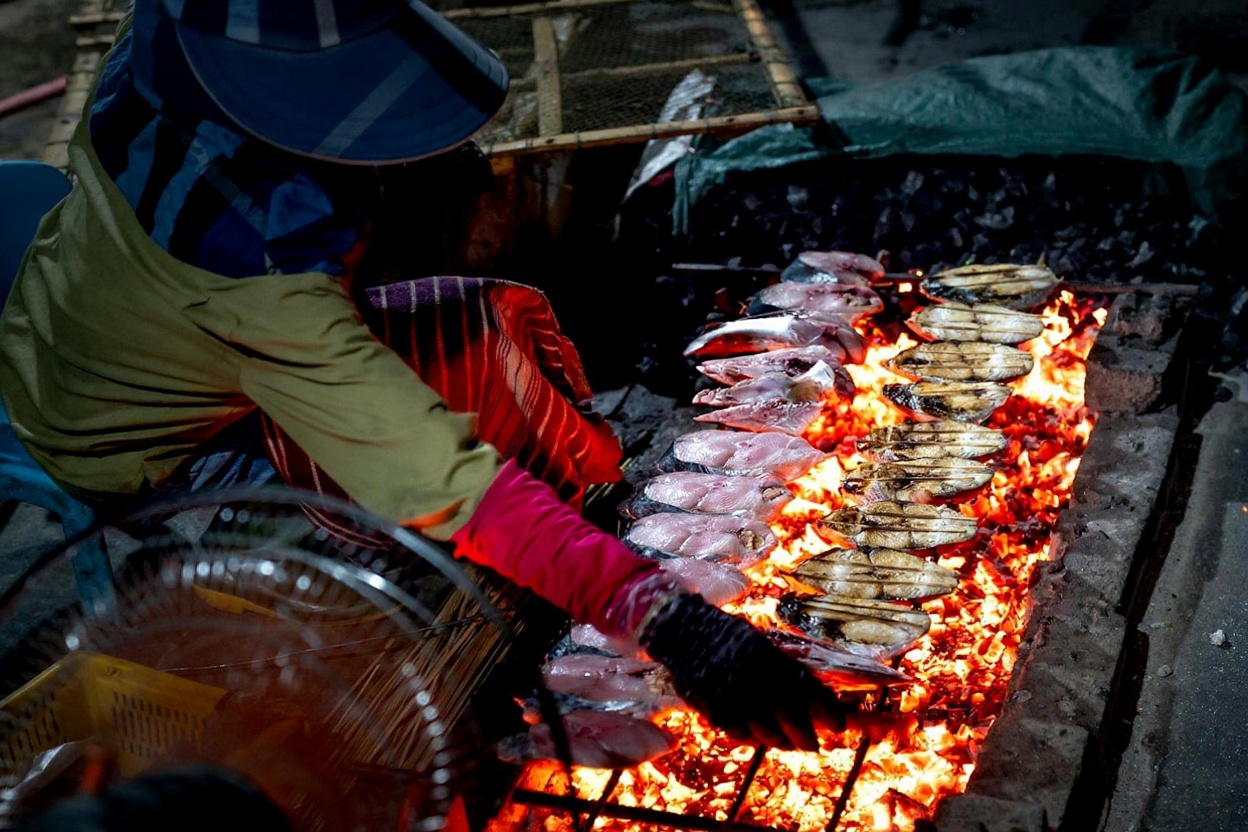
Ngo Van So Street is a single block-length stretch in the central part of the city. From 2pm to midnight it runs around 30 stalls, cooking out front on charcoal and gas, tables spilling into the street, smell of grilling meat and seafood reaching a full block in either direction before you see the stalls themselves.
✓Quick Answer
Ngo Van So food street runs from 2pm to midnight, peak 6–9pm. Around 30 stalls. Dinner for one person costs 40,000–80,000 VND (~$1.50–3) depending on what you order. Go at 6pm when all stalls are running and the crowds haven’t peaked yet.
The stalls don’t have numbers or consistent names — you walk the street once to see what’s cooking, then pick a table at the stall that looks most active. The rule I use in any Vietnamese food street: eat where the locals are sitting, not where the sign is in English.
What to order at Ngo Van So specifically:
Start with bánh xèo tôm nhảy from whichever stall is doing the highest volume — you’ll see the live shrimp tank near the front. Add a plate of nem nướng. Get a beer (bia hơi or Tiger from the nearest cooler for 20,000–32,000 VND). If you’re still hungry: grilled seafood, which will be whatever came in that morning — squid, prawn, small crab, white fish fillets.
The street peaks around 7–8pm on weekends when it becomes genuinely loud — generator noise from the stall lights, the hiss of charcoal, tables pushed close together. If you want the food without the atmosphere, come at 5–6pm when the stalls are just hitting their stride but the crowds haven’t arrived.
⚠Real Talk
The Ngo Van So experience is better the first time than the fifth. After two consecutive evenings here I was starting to want a proper sit-down meal. Balance it with the specific restaurants below — the street is the introduction to Quy Nhon food, not the entire course.
Best Specific Restaurants — Addresses and What to Order
These are places with actual addresses from the Vietnam Nomad and Lonely Planet research pulls — names and prices that check out across sources.
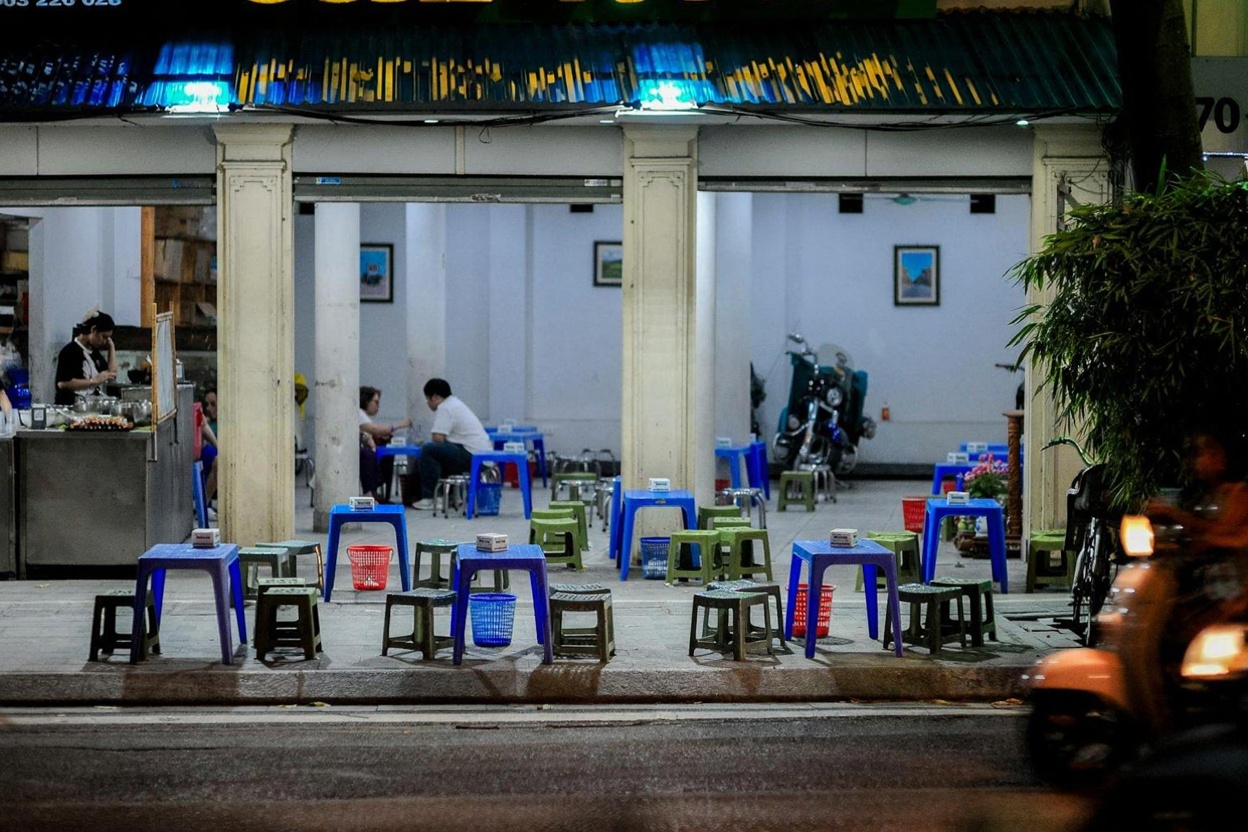
Bun Ca Thuy — 261 Tang Bat Ho Street. The bún cá reference. 30,000 VND (~$1.15) per bowl, open mornings until sold out (usually by 10–11am). The broth is clear and sweet, the fish cake is house-made, the herbs are fresh. Arrive before 9am if you want the best bowl — the soup gets more concentrated and less refined as the day wears on and the pot empties and refills.
Ngoc Lien — 379 Nguyen Hue Street. Another bún cá option for a sit-down version: 35,000 VND (~$1.35). Slightly more restaurant-style than a street stall — tables, chairs, a small menu on the wall. Good for travelers who want the dish without the point-and-guess dynamic of a market stall.
Ong Hung — 24 Dien Hong Street. 48,000 VND (~$1.80). The dish here is bánh hỏi (say: bahn hoy) — thin pressed rice noodle sheets eaten with grilled meat and herbs. Less well-known than bún cá but equally local. The pork here is grilled over charcoal and the noodle sheets are made fresh.
O Hue — 30 Truong Chinh Street. 25,000 VND (~$0.95). Bún bò Huế (say: boon boh hway) — the spicy beef noodle soup from Hue, available this far south. If you’ve already had it in Hue, the comparison is interesting: the version here is slightly less fermented, slightly lighter. Worth trying once for the comparison.
Ba O — 384 Bach Dang Street. 25,000 VND (~$0.95). Bánh canh (say: bahn cahn) — thick noodle soup. The budget version of the crab noodle soup: pork and prawn rather than full crab, but the thick noodles and rich broth are the same.
Ba Xe — 50/22C Nguyen Thai Hoc Street. 20,000 VND (~$0.75). Black iced coffee, Vietnamese filter style. If you’re walking from Thap Doi Cham towers toward the promenade, this is the coffee stop. The stall has been at this address long enough that locals use it as a landmark.
Cay Man — 742 Tran Hung Dao Street. 20,000 VND (~$0.75). Street snacks: chè (say: cheh) — Vietnamese sweet dessert soups and shaved ice. The version at Cay Man uses fresh coconut, mung bean, and jelly. Good for the afternoon between the food street sessions.
Where to Eat Seafood Properly
Seafood in Quy Nhon deserves its own section because the standard approach — walking into any promenade restaurant and ordering whatever is on the menu — gives you a middling result at a tourist price.
✓Quick Answer
For the best-value fresh seafood, eat one block back from the promenade at restaurants on Nguyen Hue or An Duong Vuong streets — same fish, lower price. Budget 200,000–300,000 VND (~$7.60–11.40) per person for a proper multi-dish meal. Haven Vietnam at Bai Xep does the full live-tank experience.
The better approach is the restaurants on the streets one or two blocks behind the promenade — Nguyen Hue Street and An Duong Vuong — where the same fishing-fleet fish is cooked without the sea-view premium. A full seafood meal with 2–3 dishes and rice runs 200,000–300,000 VND (~$7.60–11.40) per person here versus 350,000–500,000 VND (~$13.30–19) at the promenade-facing places.
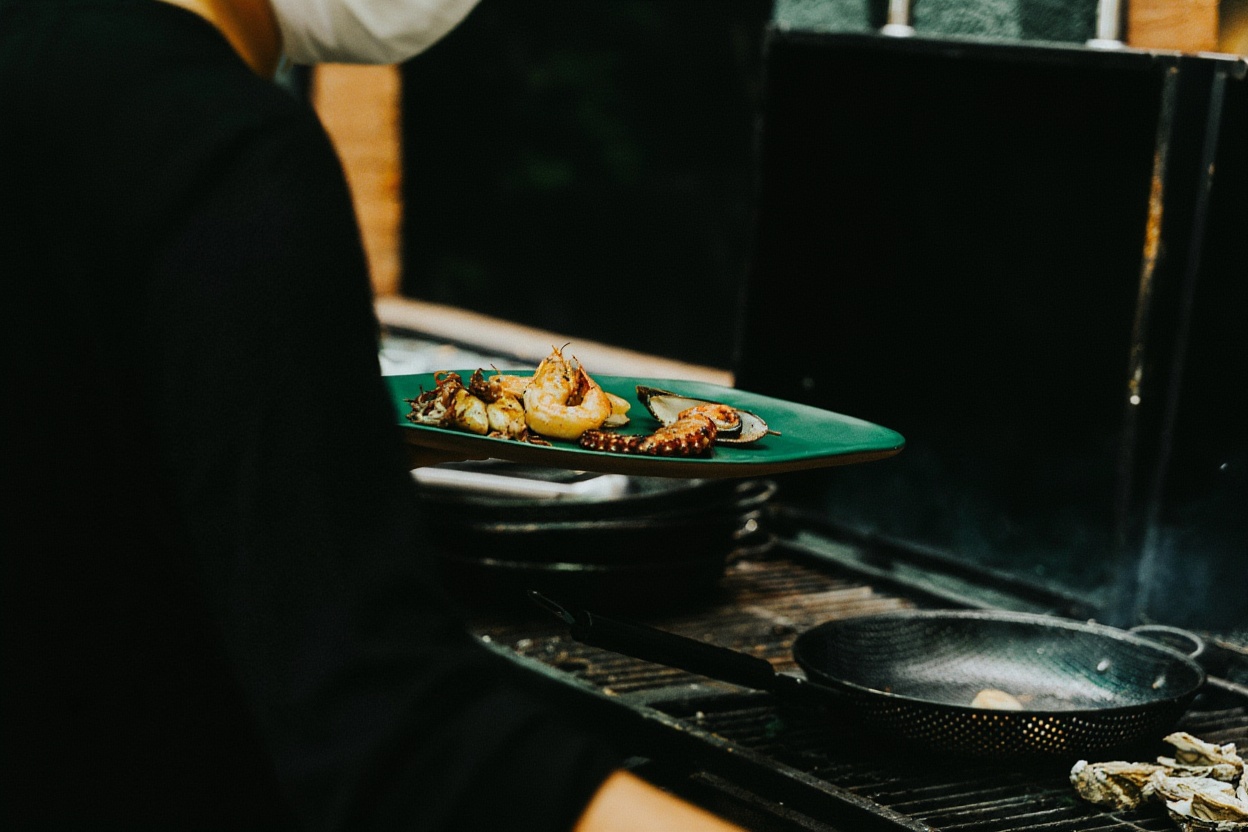
For the best seafood experience in the area: Haven Vietnam, the hotel and restaurant south of Quy Nhon toward Bai Xep. A Reddit traveler described the experience precisely: “They’ll actually present you their catch of the day, still alive in several tanks and you can choose your preferred way of preparation and seasoning.” Tables on the beach in the evening. It’s a hotel restaurant but locals use it for special occasions too — that’s usually a better signal than any guidebook recommendation.
What to order when you see a tank: blue swimmer crab (cua) steamed with ginger, white fish (cá) grilled with salt and chilli, squid (mực) grilled with lemongrass, prawn (tôm) with garlic butter. Ask the price per 100g before ordering — the standard confusion point for first-time seafood restaurant visitors in Vietnam is that tank seafood is priced by weight, not by dish.
The Breakfast Route
Quy Nhon’s best meal of the day is breakfast, eaten between 7 and 9am before the heat arrives. The food stalls open early, the soup is at its best in the morning pot, and the city hasn’t woken up yet so you eat in relative quiet.
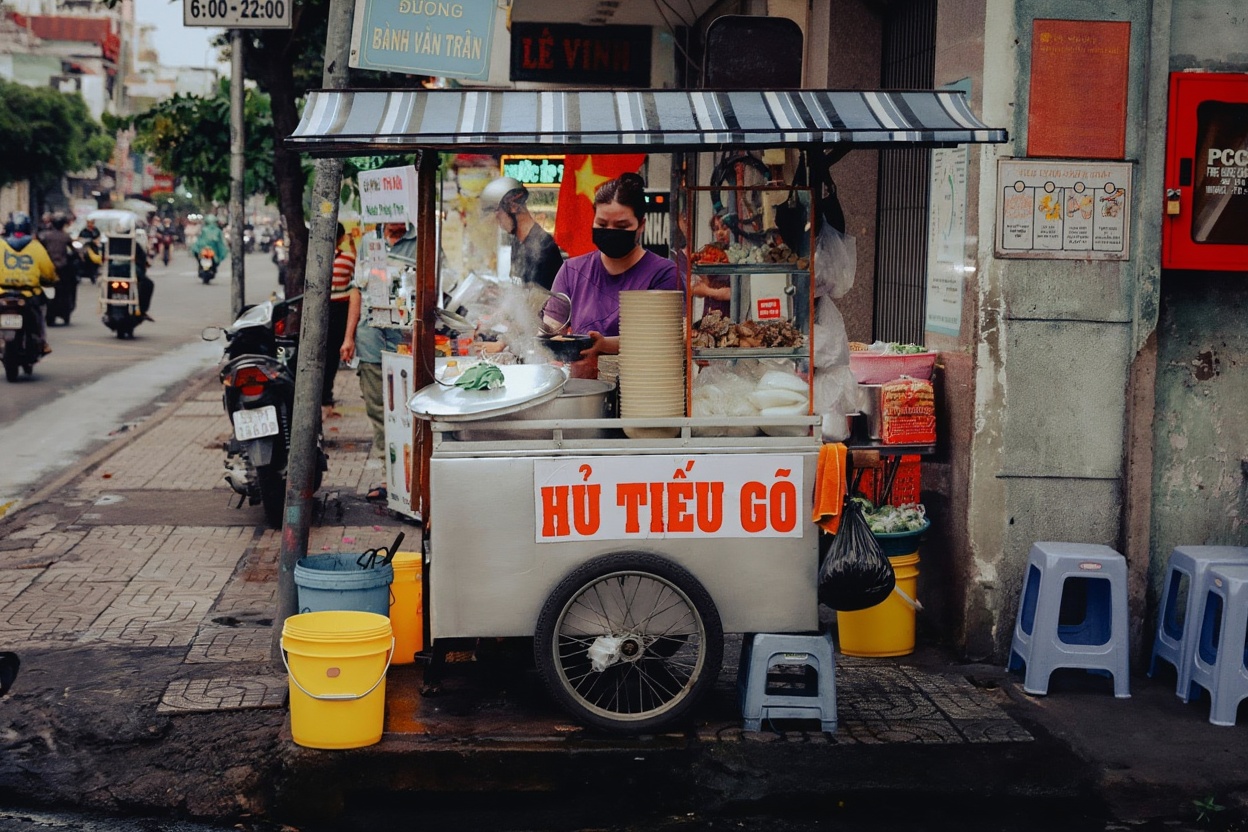
The two-stop breakfast route that works: start with a bowl of bún cá at Bun Ca Thuy (261 Tang Bat Ho, 30,000 VND) between 7 and 8am. Walk south along Bach Dang Street toward the promenade. Stop at Ba Xe (50/22C Nguyen Thai Hoc, 20,000 VND) for iced black coffee in a glass. Sit at the street table, watch the fishing boats on the promenade, drink slowly.
Total cost: 50,000 VND (~$1.90) for a complete breakfast. This is the morning Jake Morrison version of Quy Nhon — the one where you feel like you understand why people extend their stay here.
The confession: I got this wrong the first morning. Slept in until 9am, went to the nearest cafe with English on the sign, paid 60,000 VND for a mediocre smoothie bowl. Second morning I was out by 7am with a bowl of bún cá and a proper coffee and everything looked different. Quy Nhon rewards early risers.
What to Drink
Coffee is the easiest thing to get right in Quy Nhon. Vietnamese filter coffee (cà phê phin, say: ca feh fin) at 20,000–25,000 VND (~$0.75–0.95) served black or with condensed milk over ice is the standard. Every side street has a coffee stall. The Ba Xe address above is a reliable reference point.
Beer: bia hơi (say: beer huh-ee) — fresh draught beer brewed daily, 7,000–12,000 VND (~$0.26–0.45) per glass — is the cheapest way to drink in the city. Look for plastic-stool setups with a metal keg near the door. The promenade bars charge 32,000 VND (~$1.20) for a Tiger or 333 (ba ba ba, say: ba ba ba) from a bottle.
Fresh fruit juice stalls appear on the market streets (Phan Boi Chau, Le Loi) in the late afternoon — sugarcane juice (nước mía, say: nook mee-ah) pressed fresh for 10,000–15,000 VND (~$0.38–0.57) is the one that travels best in 35-degree heat.
Navigating the Food Scene Without Vietnamese
Most of Quy Nhon’s best food spots have no English menu, no QR code, and no staff who speak more than a few words. This is not a problem if you know what to do.
The point-and-pay method: Walk in, look at what other people are eating, point at that. The system works for 90% of street stalls. If there’s a menu on the wall (usually a chalkboard or laminated sheet), hold up fingers for the number of portions. The price will appear on a small piece of paper or the cook will say it — listen for the number.
Google Translate camera: Point your phone camera at any Vietnamese menu and it translates in real time. Works on printed menus and chalkboards. Essential for understanding the full range at a stall rather than just copying what the table next to you ordered.
The most useful Vietnamese for food ordering: “Một” (one, say: moat), “Hai” (two, say: high), “Cho tôi” (give me, say: cho toy), “Bao nhiêu?” (how much?, say: bow nyew). That’s enough for any stall transaction in Quy Nhon.
Allergens: Seafood is in almost everything in Quy Nhon, including dishes that aren’t obviously seafood dishes (broth, sauce bases, garnishes). If you have a seafood allergy, this city is genuinely difficult — the contamination risk at street stalls is high. The phrase “tôi dị ứng hải sản” (say: toy zee oong high san) means “I’m allergic to seafood” and is worth knowing.
For the full context on getting here and where to stay while you’re eating your way through the city, see the main Quy Nhon travel guide — accommodation options range from 150,000 VND dorm beds to the Le Mint Hotel’s rooftop pool setup.
The food street on Ngo Van So also appears in the Quy Nhon things to do guide with broader context on the evening scene.
Two things worth sorting before you land: a Vietnam eSIM so you have data the moment you clear customs, and travel insurance — medical costs for uninsured foreigners in Vietnam are significant.
Airalo eSIMs activate instantly. Buy before departure — airport SIM queues in Vietnam can take 30+ minutes.
FAQ — Quy Nhon Food
What is Quy Nhon’s most famous dish?
Bánh xèo tôm nhảy — the “jumping shrimp pancakes” where live shrimp are dropped onto a sizzling rice-flour pan mid-cook. The best version is at 91 Dong Da Street for 50,000 VND (~$1.90). Bún cá (fish noodle soup) is the everyday local dish that runs cheaper and is eaten for breakfast by most of the city. Both are specifically associated with Quy Nhon — you can’t get the jumping shrimp version exactly like this anywhere further north or south.
How cheap is food in Quy Nhon?
Very cheap by Vietnamese standards, which are already low. Breakfast soup costs 30,000–35,000 VND (~$1.15–1.35). A full dinner on Ngo Van So food street with multiple dishes and a beer runs 60,000–100,000 VND (~$2.30–3.80) per person. A seafood meal at a local restaurant is 200,000–300,000 VND (~$7.60–11.40) for a multi-dish spread. The only expensive food in Quy Nhon is at the resort hotel restaurants — avoid those unless someone else is paying.
Is Quy Nhon good for vegetarians?
Moderate. The main dishes (bún cá, bánh xèo tôm nhảy, nem nướng) are all meat or seafood-based, and the food street is heavily grill-focused. However, there are dedicated chay (vegetarian, say: chay) restaurants in the city — look for the yellow sign with “Cơm Chay” which indicates Buddhist vegetarian food. The market streets also have vegetable and tofu stalls. It’s easier than some central coast cities but harder than Hoi An, which has a larger tourist infrastructure for dietary preferences.
Is Google Maps reliable for finding food in Quy Nhon?
Partially. The addresses in this guide are verified. For finding new spots, Google Maps listings in Quy Nhon are patchy — many of the best stalls have no listing, or have a listing with no photos and no reviews. The better method is to walk the market streets (Phan Boi Chau, Le Loi) in the morning and follow the volume: the stall with the most plastic stools occupied is almost always the right choice. Local Reddit advice: “just ask the local, google maps is fine tho” — meaning it works as a navigation tool but not as a food discovery tool in this city.
What’s the best time to eat on Ngo Van So food street?
6pm is the sweet spot — all stalls are running at full capacity, the charcoal is properly hot, the crowds haven’t peaked yet. By 8pm on a weekend it becomes tightly packed and loud. If you want the full atmosphere: come at 7–8pm and accept the crowds as part of it. If you want the food without the chaos: come at 5:30–6pm and leave by 8pm.