Last updated: May 2026 · Jake Morrison · 5 years in Vietnam
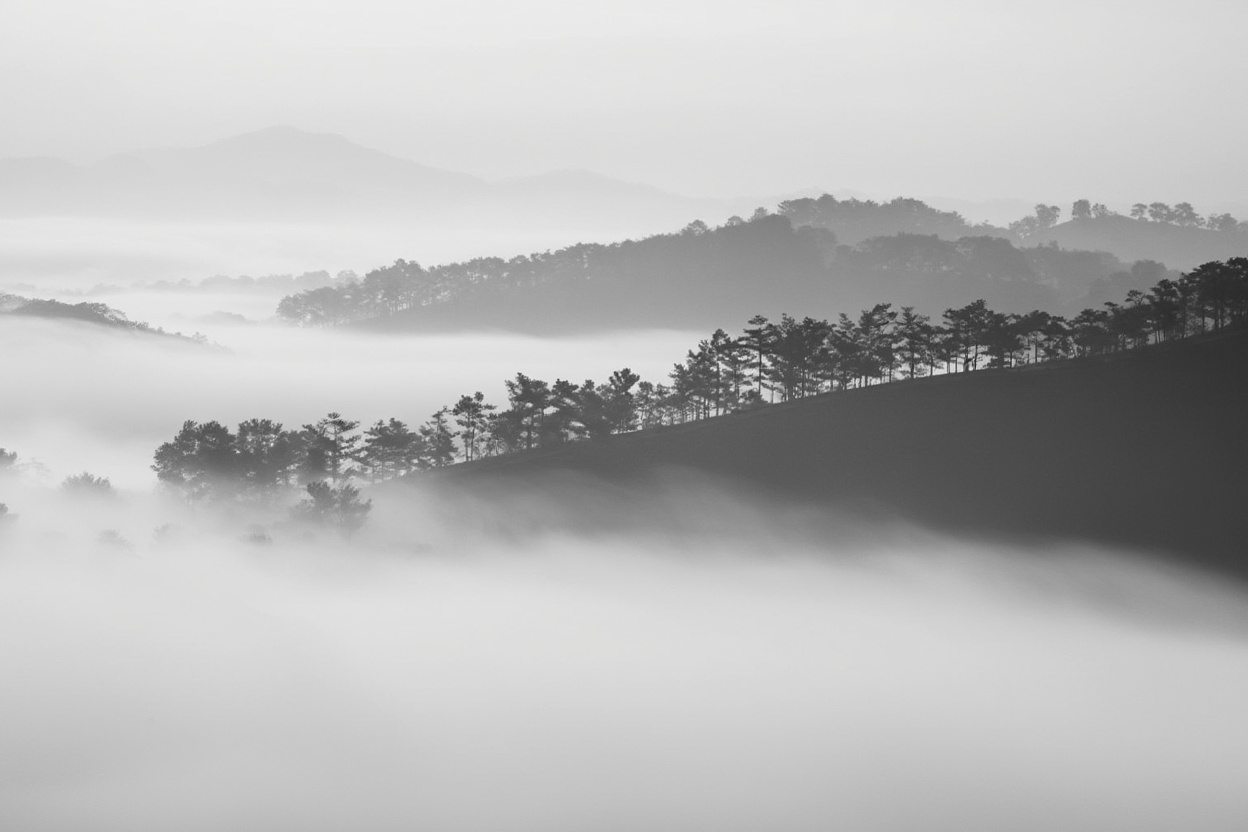
My first Dalat trip was a one-night rebound from HCMC heat. I arrived at 10pm, ate at the night market, woke up cold at 6am (which in HCMC terms was startling), walked around Xuan Huong Lake in a light jacket while the local morning exercise crowd moved past me, and extended my stay by two days without planning to. That’s the Dalat pattern. People book three days because they’ve been told that’s the right amount and they end up recalibrating upward once they’re there.
The city is small enough to navigate without apps and dense enough to fill a week if you go deep. The French built it as a colonial resort — the architecture left behind from that era (a 1930s train station, a 1920s palace hotel, the Notre-Dame de Dalat Cathedral, the Da Lat Lycée) gives the city a physical character unlike any other Vietnamese city. Combine that with the highland agricultural base and the adventure sports industry that’s grown around the waterfall geography, and you have a destination that operates on multiple levels simultaneously.
How to Get to Dalat from HCMC and Hanoi
Dalat has direct flights from both HCMC and Hanoi. From HCMC, VietJet and Bamboo operate the 55-minute route with fares typically at 500,000–1,200,000 VND (~$19–45.50) when booked in advance. The airport (Lien Khuong Airport) is 28km south of the city — taxi to the center runs 200,000–300,000 VND (~$7.60–11.40), or a Grab is typically 150,000–220,000 VND (~$5.70–8.35). From Hanoi, the flight is 2 hours and Dalat is accessible as a standalone destination or as a stop within a south Vietnam circuit.
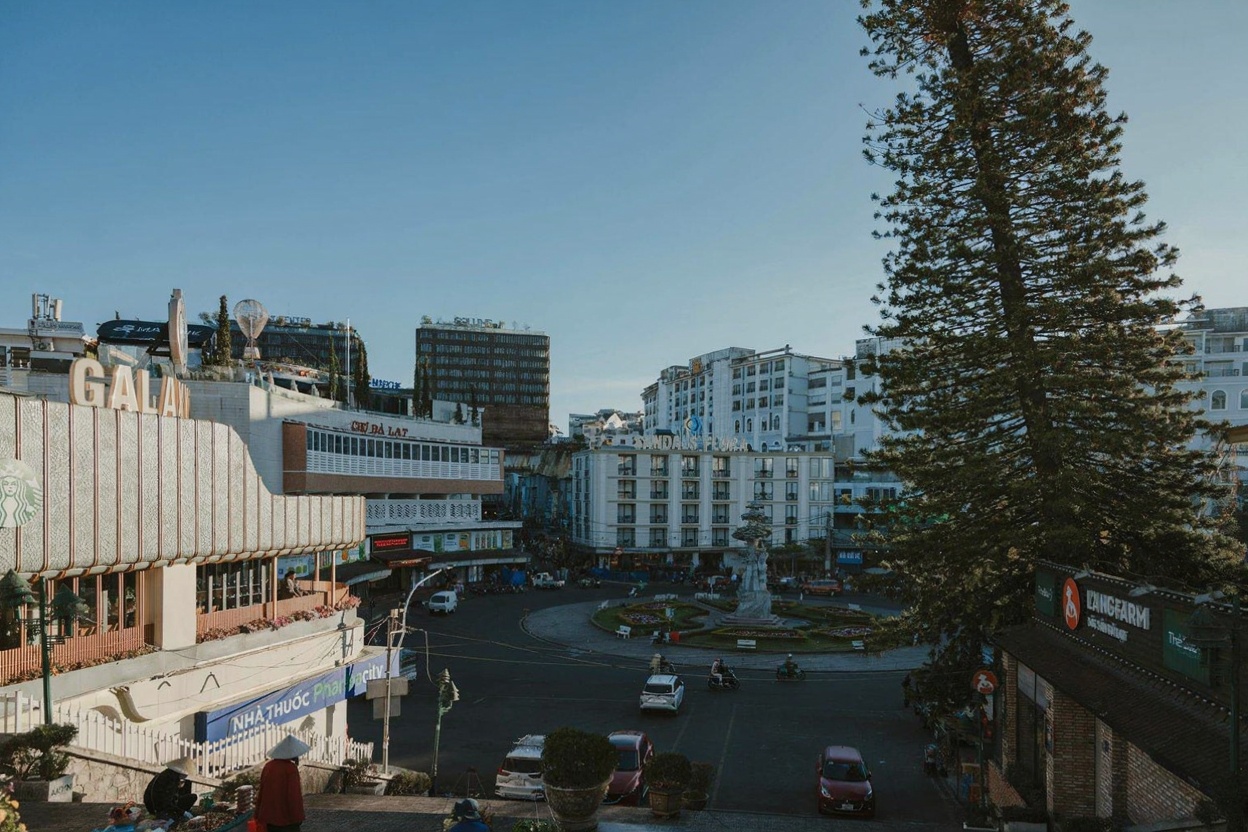
By bus from HCMC: the sleeper bus takes 7–8 hours and departs from various points in District 1 and 3. Phương Trang (FUTA Bus) is the most reliable operator — 200,000–280,000 VND (~$7.60–10.65) for a semi-sleeper seat. The bus arrives at the Da Lat bus station, from which Grab or xe ôm (say: say-ohm — motorbike taxi) to the city center runs 50,000–80,000 VND (~$1.90–3.05).
12Go covers most Vietnam routes — sleeper buses, trains, and island ferries. Compare schedules and book in advance during peak season (Dec–Feb, Jun–Aug).
✓Quick Answer
Dalat from HCMC: 55-minute flight (~$19–45 booked ahead) or 7–8 hour sleeper bus (~$7.60–10.65). The bus is viable for budget travelers with time; the flight is the practical choice for 3-day trips. From Hanoi: fly direct (2 hours) or build Dalat into a south Vietnam itinerary after arriving in HCMC. Most efficient: fly HCMC → Dalat, spend 3 days, bus or fly back.
The Crazy House and What’s Actually Worth Your Time
The Crazy House (Biệt Thự Hằng Nga — say: byet tyoo hang nga) is Dalat’s most famous attraction and it delivers — the guesthouse-gallery designed by architect Dang Viet Nga looks like a Gaudí fever dream meets a Vietnamese fairy tale, with twisted tree-trunk corridors, cave rooms for guests, bridges connecting turrets, and rooftop spaces where you look out over Dalat’s pine-covered hills. Entrance is 60,000 VND (~$2.30). Allow 2 hours to explore all the levels properly. It’s genuinely unusual and worth the visit. Arrive before 9am or after 4pm to avoid the group tour crowds.
Xuan Huong Lake (say: shwen hwong) is Dalat’s geographic center and its best free experience. The 7km circuit around the lake takes 90 minutes at a comfortable walking pace — a path that runs through pine forests, past the colonial-era Da Lat Palace Hotel (built 1922, still operating at 3,000,000–5,000,000 VND/night, ~$114–190), across the golf course edge, and back through the morning market area where the local breakfast vendors set up from 6am. Go at dawn. The lake mist is thickest in the first hour after sunrise and the city is quietest. This is the version of Dalat that makes sense of why the French built a resort here.
The Da Lat Train Station (Ga Đà Lạt — say: gah dah laht) is one of Vietnam’s most beautiful colonial buildings — built 1932, art deco exterior in yellow and white, the functioning remnant of what was once the Dalat–Phan Rang cog railway. The only remaining operational route runs the 8km to Trai Mat village every day (30 minutes, 52,000 VND round trip, ~$1.97) — three departures daily at 7:45am, 9:50am, and 2pm. The Linh Phuoc Pagoda at Trai Mat is worth the trip end: a Buddhist temple covered entirely in ceramic mosaic, one of the more visually unusual religious buildings in Vietnam. The combination — the heritage train + the mosaic pagoda — takes a morning and costs under 200,000 VND (~$7.60) total.
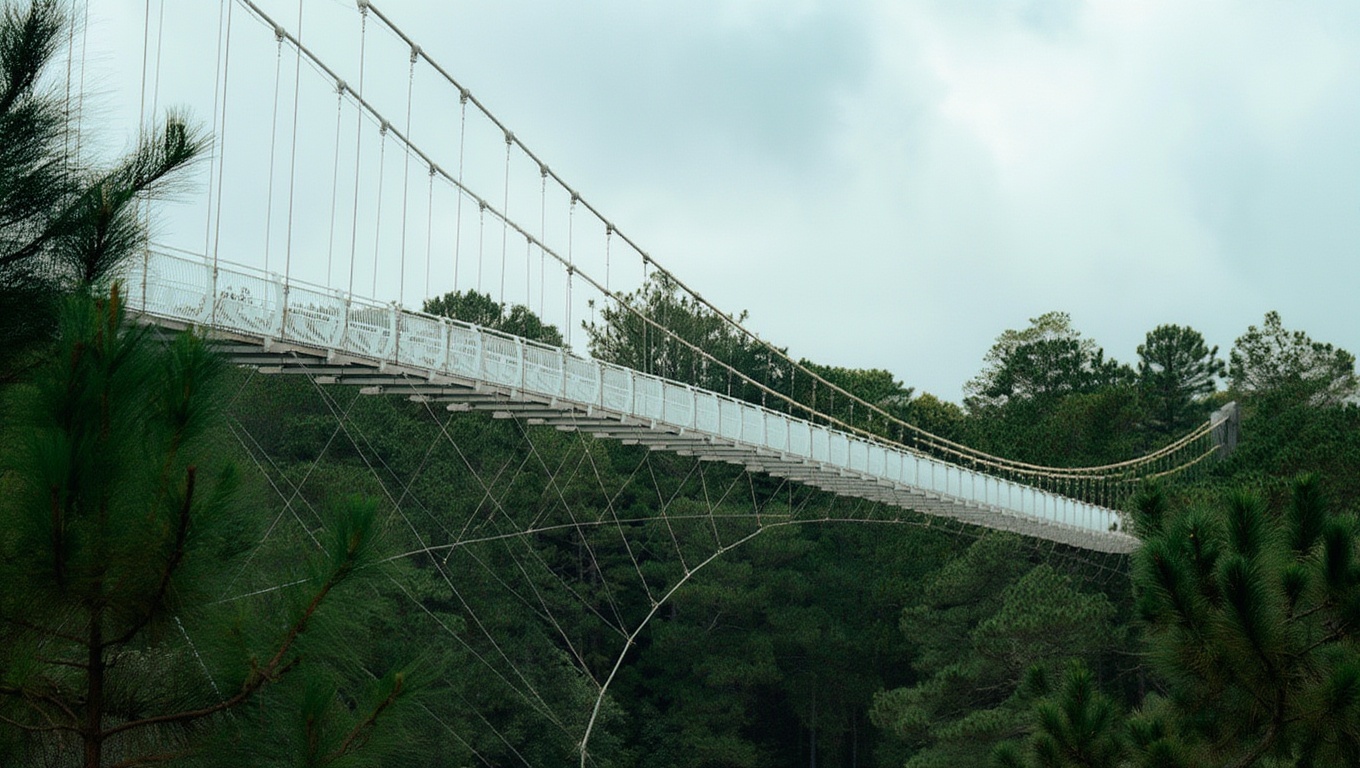
Truc Lam Zen Buddhist Monastery (Thiền Viện Trúc Lâm — say: tyen vyen trook lam) sits on a pine-forested hill above the Ti Tuyen Lam lake, 6km south of the city. The cable car from the Da Lat Cable Car Station (100,000 VND return, ~$3.80) crosses a valley of pine trees and delivers you to the monastery grounds in 10 minutes — the scenery below is distinctly alpine. The monastery is active — monks in grey robes, the smell of incense from the meditation halls, the sound of bells. The lake below is clean and the surrounding walking trails through the pine forest take 1–2 hours.
Dalat’s Adventure Side — Canyoning, Biking, and Countryside Tours
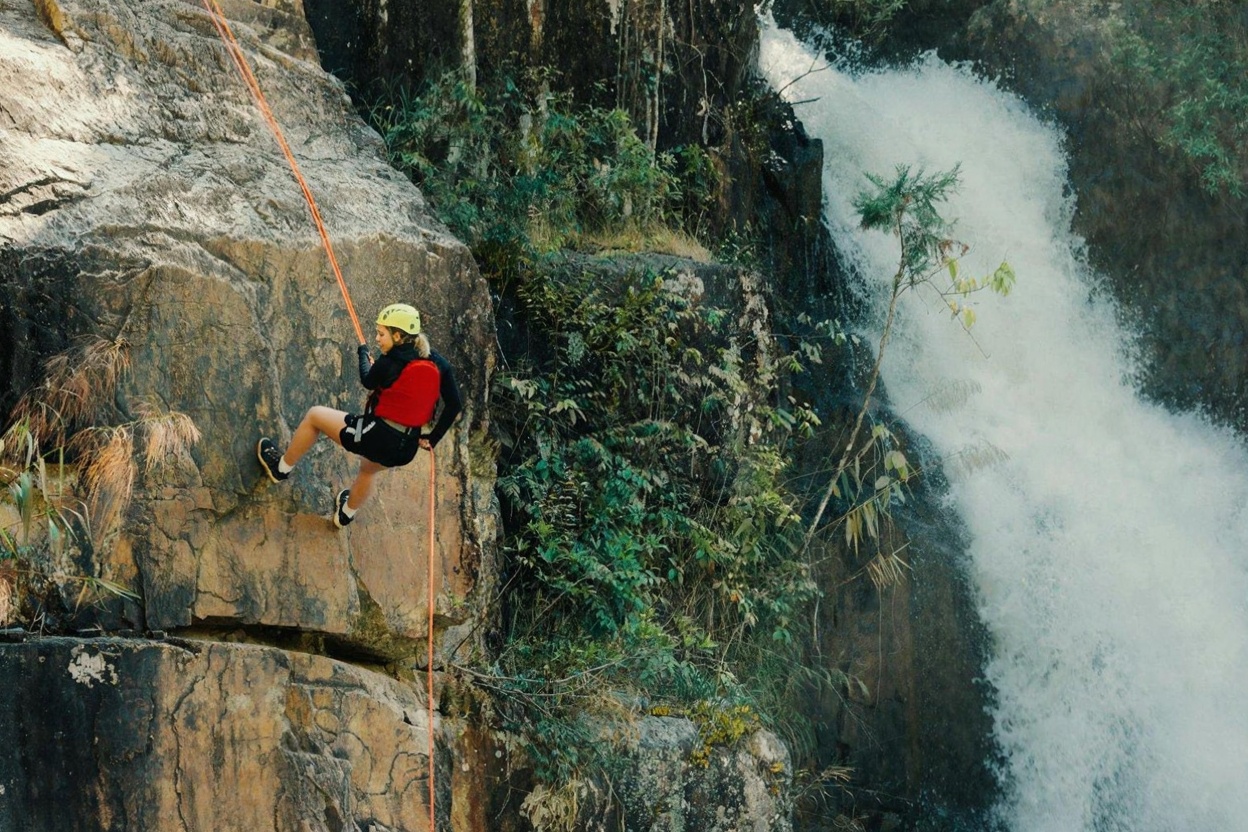
Datanla Falls (Thác Datanla — say: tahk dah-tan-lah), 5km south of the city center, is the base for Dalat’s canyoning and adventure sports industry. The falls run three tiers; the canyoning experience here involves rappelling down the waterfall faces, sliding natural rock chutes, and swimming through canyon pools. Multiple operators offer the half-day tour — Adventure Tours Da Lat and Phat Tire Ventures are the most established — at 750,000–1,200,000 VND (~$28.50–45.50) per person including all equipment, guide, and transport. The half-day tour (8am–1pm) covers 2–3 waterfall sections. Go with an operator that provides helmets and life jackets as standard, not optional extras. There have been incidents at Datanla from operators cutting safety corners — verify equipment before paying.
ℹKnow Before You Go
Klook has the widest selection for Vietnam and is usually the cheapest. KKday is strong on day trips and local experiences.
een Dalat operators. The activity involves real rappelling on wet rock above genuine drops. Adventure Tours Da Lat and Phat Tire Ventures have established safety track records. Avoid operators offering prices under 500,000 VND (~$19) for canyoning — the discount comes from equipment quality and guide training. Check that your guide demonstrates safety equipment operation before the first descent, not after.
Countryside motorbike tours (“Easy Rider” tours) are Dalat’s original adventure product — a half-day or full-day circuit visiting coffee farms (robusta and arabica, both grown in the Lam Dong highlands), silk farms, flower fields, ethnic minority villages, and waterfalls. The format: a guide on a motorbike, you riding pillion or on your own bike if licensed. The good Easy Rider guides know which farms are genuinely working rather than tourist-staged; ask which farm they use before booking. A full day runs 500,000–800,000 VND (~$19–30.40) per person for a private tour with a guide. The Elephant Falls (Thác Voi — say: tahk voy, 30,000 VND entrance, ~$1.15) circuit 25km from the city is the most commonly combined half-day route — the falls are the largest in the Lam Dong province and the path behind the main cascade (through a narrow rock passage) is genuinely dramatic.
Mountain biking: Dalat’s elevation and trail terrain — pine forest singletracks, highland tea fields, river valley descents — have built a legitimate mountain biking circuit over the last decade. Groovy Gecko Tours runs multi-day mountain bike tours from Dalat into the surrounding highlands. Single-day rentals of quality trail bikes run 200,000–400,000 VND (~$7.60–15.20) from shops near Xuan Huong Lake. The 50km coffee highland circuit (Cau Dat Tea Plantation → Datanla → Da Lat city) is the most popular cycling day route, with a total elevation gain of approximately 800m — serious but achievable for fit riders.
Coffee, Strawberries, and What Dalat Actually Tastes Like
Dalat’s food identity is built around the highland agricultural base that the elevation and temperate climate create. The things you eat here that you can’t eat anywhere else in Vietnam: freshly picked strawberries from farms in the Cu Hiep area (strawberry picking 80,000–120,000 VND, ~$3.05–4.55 per kg of what you pick), artichoke tea (trà atiso — say: trah ah-tee-so) brewed from the dried artichoke flowers that grow in the highland fields, locally produced wine from the Lam Dong highland vineyards (cheap and sweet by European standards, culturally interesting as the only Vietnamese wine region), and avocado milkshakes (sinh tố bơ — say: sing toe buh) made from the highland avocados that are larger and creamier than any imported equivalent.
★Jake’s Pick
Sinh tố bơ at the Da Lat Night Market — 25,000–35,000 VND (~$0.95–1.33) from the smoothie stalls on the market’s north side. The avocados come from highland farms and the smoothies are made fresh. I’ve drunk a lot of avocado smoothies in Vietnam and the Da Lat version is not the same category as what you get in Hoi An or HCMC. Get there at 7pm before the stall queues build.
Bánh tráng nướng (say: ban chang nung — grilled rice paper) is Dalat’s signature street snack: a rice paper disc grilled over charcoal, topped with quail egg, dried shrimp, spring onion, and a sauce combination that varies by vendor. The night market stalls charge 10,000–20,000 VND (~$0.38–0.76) per sheet. It’s the Dalat snack that every local recommends to visitors, it’s genuinely good, and it photographs well enough that the vendors near Xuan Huong Lake in the evening have built a cottage industry from travelers trying it. Get it from the vendors near the northwest corner of the lake, not the tourist-facing stalls on Nguyen Van Troi street where prices double.
Coffee: Dalat sits in the Lam Dong Province highlands — the southernmost edge of Vietnam’s Central Highlands coffee growing region. The Cau Dat area (12km from the city) is the most accessible working tea and coffee plantation in the Da Lat circuit. Most coffee in Da Lat’s cafés is locally grown robusta or arabica; ask for cà phê bột (say: kah feh boat — ground coffee) rather than instant if ordering anywhere that might default to Nescafé. The weasel coffee (cà phê chồn — say: kah feh chon) farms around Dalat are a genuine part of the local agricultural landscape — the civet coffee process involves coffee cherries that have been eaten and passed by Asian palm civets. Whether the ethics appeal or not, the coffee is expensive (200,000–500,000 VND, ~$7.60–19 for a cup) and the farms are worth visiting for the agricultural context even if you don’t buy.
The Da Lat Night Market runs every evening 5pm–midnight along Nguyen Thi Minh Khai street, below the Da Lat Market building. The market sells hot pot set-ups (lẩu — say: loh), grilled corn (50,000 VND, ~$1.90), strawberry jam, dried fruit, local wine, and every Dalat specialty in stall form. The crowd is a genuine mix of Vietnamese domestic tourists and international visitors — the night market energy is festive rather than commercial. Budget 100,000–150,000 VND (~$3.80–5.70) per person for a thorough snack circuit.
Where to Stay in Dalat
Dalat’s accommodation is concentrated in two areas: the city center (within 1km of Xuan Huong Lake) and the “villa district” on the hillside northeast of the lake, where French colonial villa guesthouses run from 400,000–1,500,000 VND (~$15.20–57) per night. The villa district is the better base for atmosphere — the streets are quieter, the architecture is genuinely colonial rather than modern concrete, and the walk down to the lake is 15 minutes. The city center is better for walking distance to the night market and bus connections.
Budget accommodation: Da Lat has a strong backpacker hostel scene around the Phan Dinh Phung street area — dormitory beds run 150,000–250,000 VND (~$5.70–9.50) per night and private rooms 350,000–500,000 VND (~$13.30–19). Mid-range: the villa guesthouses are the Dalat sweet spot at 600,000–1,200,000 VND (~$22.80–45.50) — colonial architecture, breakfast usually included, the kind of places with gardens and fireplaces that make sense at 1,500m elevation. High-end: Dalat Palace Hotel (built 1922, recently renovated) remains the city’s most atmospheric stay at 3,000,000+ VND (~$114+) per night, with the golf course and Xuan Huong Lake directly on the grounds.
nd of the line, is one of the more memorable half-mornings I’ve had in the city. The train itself (52,000 VND round trip, ~$1.97) is a heritage train with wooden seats that runs on the surviving section of the old Dalat–Phan Rang cog railway. I sent those three travelers wrong. The train is worth doing. Go at 7:45am for the first departure.
⚠Real Talk
Dalat’s tourist infrastructure is well-developed and some of it has become a theme park version of itself. The Valley of Love (Thung Lũng Tình Yêu — say: toong loong ting yew) is an entrance-fee park that sells pink swan boats and heart-shaped photo frames to Vietnamese couples on weekend dates. It’s fine — not cynical or bad, just not the Dalat that makes people fall in love with the city. Skip it unless you have children. The Le Mat Truc Lam cable car, the Crazy House, the Datanla canyoning, the train to Trai Mat — these are the things worth your time. The “attractions” designed primarily as photo backgrounds can be walked past.
How Long to Stay in Dalat
Two days is the minimum that makes the trip worthwhile. Day 1: arrive, Xuan Huong Lake circuit at dawn or dusk, Da Lat Night Market in the evening, bánh tráng nướng, avocado smoothie. Day 2: Crazy House in the morning, Truc Lam Monastery + cable car in the afternoon, the Datanla Falls walk (no canyoning, just the viewing platform) before dinner. That’s the two-day version and it leaves out most of what makes Dalat interesting.
Three days is the version most travelers remember: adds the canyoning full morning, the countryside motorbike tour (coffee farm + Elephant Falls), and time to properly explore the villa district on foot. Four days adds the Cau Dat tea plantation day trip, strawberry picking, and the kind of unhurried morning walks around the lake at dawn that Dalat’s temperature actually invites rather than punishes. If Dalat is a stop within a larger south Vietnam circuit, three days is the right allocation.
Two things worth sorting before you land: a Vietnam eSIM so you have data the moment you clear customs, and travel insurance — medical costs for uninsured foreigners in Vietnam are significant.
Airalo eSIMs activate instantly. Buy before departure — airport SIM queues in Vietnam can take 30+ minutes.
FAQ — Dalat Vietnam
Is Dalat worth visiting?
Yes — it’s one of Vietnam’s most distinctive cities and the most underrated on the standard backpacker circuit. The combination of year-round cool weather, French colonial architecture, highland food culture, and adventure activities is genuinely unique. Most travelers who visit Dalat rate it among their Vietnam highlights. The caveats: some attractions are tourist-staged (Valley of Love, the more commercial “flower gardens”), and the city has developed fast enough that the less photogenic bus station area and new concrete construction can disappoint on arrival. Stay in the villa district, orient around the lake, and Dalat delivers. For a full breakdown by budget and location, see our Dalat where to stay guide.
How many days do you need in Dalat?
Three days is the sweet spot. Two days is viable if time is limited — Crazy House + Xuan Huong Lake + Night Market covers the highlights. Three days adds the canyoning experience at Datanla and a countryside motorbike tour (coffee farm + Elephant Falls), which is where Dalat’s character outside the city center reveals itself. Four or five days is ideal for travelers who want to trek, mountain bike the highland circuit, or explore the Cau Dat tea plantation properly.
What is Dalat known for?
French colonial architecture and year-round cool weather (the “City of Eternal Spring”). Locally grown strawberries, coffee, artichokes, avocados, and temperate vegetables. The Crazy House (a Gaudí-inspired guesthouse by architect Dang Viet Nga). Canyoning at Datanla Falls. Highland motorcycle tours through coffee and tea farms. Bánh tráng nướng (grilled rice paper street snack). Da Lat wine from the Lam Dong highland vineyards. And the 1932 colonial train station with its heritage train service to Trai Mat.
What is the best time to visit Dalat?
Year-round — Dalat’s 1,500m elevation keeps it at 15–23°C regardless of coastal Vietnam’s seasonal extremes. December–March is the driest stretch with the most reliable sunshine. The flower festival (Da Lat Flower Festival) runs biennially in December and is a major domestic tourism event. June–August brings slightly more rain and is Dalat’s domestic peak season (Vietnamese school holidays). November–January can have cold evenings (12–14°C) requiring a jacket — pack accordingly. The one true bad day in Dalat is a heavy fog/rain day in the October-November transition, but these are single-day events rather than sustained weather patterns.
How do I get from Saigon to Dalat?
Two options: fly (55 minutes, 500,000–1,200,000 VND, ~$19–45.50 booked in advance via VietJet or Bamboo) or sleeper bus (7–8 hours, 200,000–280,000 VND, ~$7.60–10.65 via Phương Trang/FUTA Bus). The flight is the practical choice for 3-day trips; the overnight bus is good for budget travelers with extra time or those who want to arrive fresh for an early morning. The bus from Mien Dong bus station in HCMC departs multiple times daily. From the Da Lat bus station, Grab to the city center runs 50,000–80,000 VND (~$1.90–3.05).
Is Dalat safe?
Yes — Dalat is one of Vietnam’s safest tourist cities. Petty theft rates are lower than the major coastal cities, the tourist infrastructure is established and generally straightforward, and the smaller city scale means fewer transport and accommodation scams than HCMC or Hanoi. The canyoning activity has a specific safety risk: operator quality varies significantly. Use established operators (Adventure Tours Da Lat, Phat Tire Ventures) rather than the cheapest option. Dalat’s mountain roads at altitude can be foggy and slippery at night — if motorbike riding, do it in daylight. For a full breakdown of how to spend your time, our Dalat things to do guide covers every attraction with honest takes on what’s worth it.
For the full breakdown on transport options, timing, and what to expect, see our guide on getting to Dalat from Saigon.