
Last updated: June 2026 — prices and transport options verified
I went to Quy Nhon the first time because my night train from Đà Nẵng to HCMC stopped there and I had a six-hour window. I left four days later. The combination of a beach I had essentially to myself, grilled lobster for the equivalent of $8, and a local restaurant owner who spent an hour teaching me to correctly pronounce “cá thu nướng” (grilled tuna — say: ka too noong) was enough to reroute the rest of my trip.
Quy Nhon sits roughly halfway down Vietnam’s central coast — 680km from Hanoi, 240km from Hội An, 185km from Nha Trang. It’s between everything and directly on the way to nothing specific, which is historically why tourists drove past it. That’s starting to change. Slowly. The best-kept-secret window is still open, but not indefinitely. Go now.
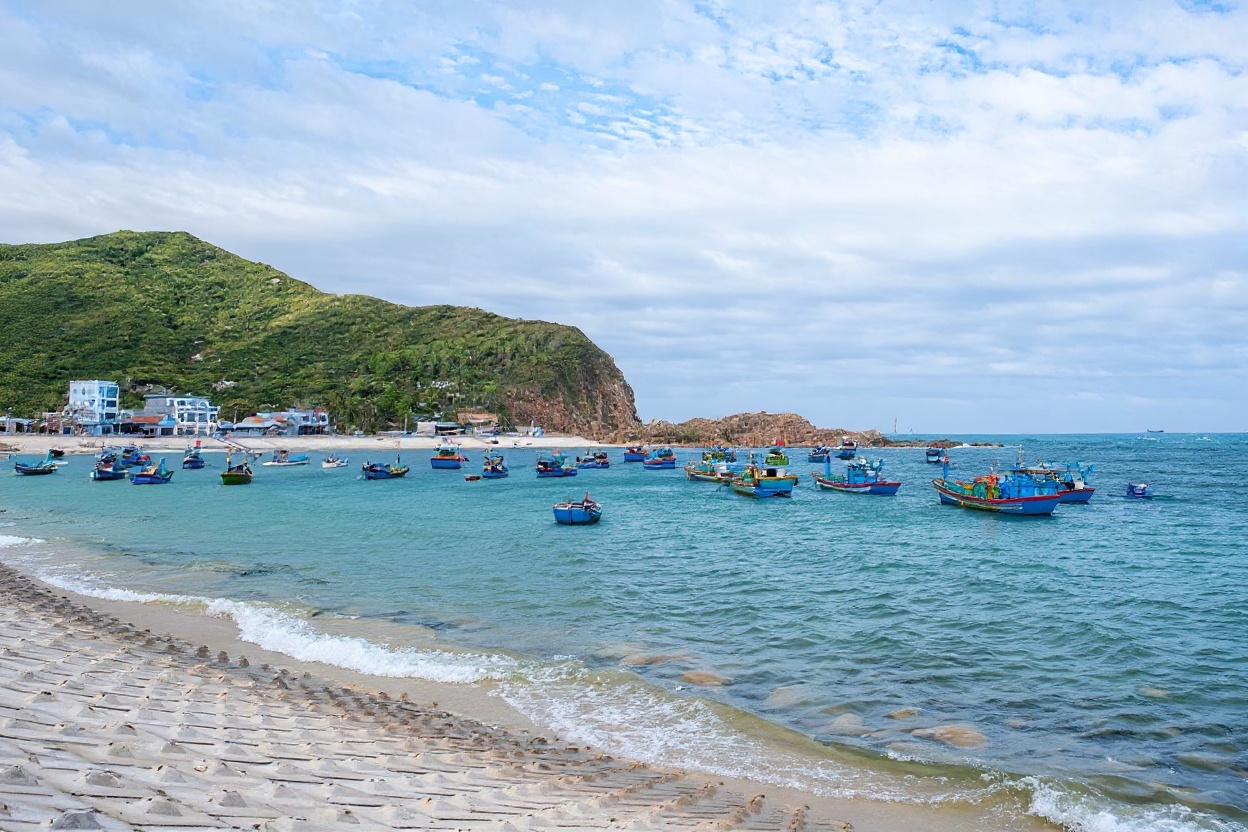
The Beaches: Which One Is Actually Worth Your Time
There are four beaches in the Quy Nhon area worth knowing about. They’re not all equal.
Quy Nhon City Beach (Bãi Biển Quy Nhơn) runs the length of the city waterfront for about 4km. It’s clean, has a paved promenade, fills with locals in the morning and evening, and has seafood restaurants and street food stalls running along the boardwalk after 5pm. It’s a genuinely pleasant public beach — no entrance fee, no hassle, no lounger vendors following you. It’s also urban. You’re looking at buildings and the city fishing fleet. Good for an evening walk and dinner. Not the beach you came to Vietnam for.
Bãi Xép is the beach that makes repeat visitors to Quy Nhon go quiet when they talk about it. A small fishing village 12km south of the city, accessed by a road that wraps around rocky headlands above the water. The beach is a crescent of pale sand backed by fishing boats and a few small guesthouses. It’s where Vietnamese weekenders go. There are no beach clubs, no sunbed rental operations, no five-story hotels overlooking the sand. The water runs clear blue over sand and rock with good snorkeling off the far end. Getting there: motorbike rental in Quy Nhon city runs 100,000–150,000 VND/day (~$3.80–5.70) — ride 20 minutes south on Highway 1D. It’s one of the better 20-minute detours in Vietnam.
Kỳ Co Island is where Vietnamese travel influencers have been taking photos for three years. Turquoise water against dramatic limestone cliffs, completely isolated from the mainland. Access requires a 15-minute boat from the pier at Nhơn Lý village — tickets run 150,000 VND (~$5.70) return, available at the pier. The boat schedule varies by demand; weekday mornings are the right time. There’s a beach entry fee of 50,000–100,000 VND (~$1.90–3.80) on arrival. Worth it. The water genuinely looks like the photos, which in Vietnam is rarer than you’d think.
Eo Gió (say: ee-oh zee-oh) — literally “Wind Gap” — is a rocky headland 25km north of Quy Nhon with no beach at all but some of the most dramatic coastal scenery on this stretch of coast. Waves hit the rocks from two directions simultaneously; the sound is disorienting in the best possible way. No fee, no crowds outside Vietnamese holidays. Best in late afternoon light. Add it to the Kỳ Co or Bãi Xép day trip.
✓Quick Answer
Which beach in Quy Nhon is best? For swimming and photographs: Bãi Xép (fishing village, 12km south). For turquoise island scenery: Kỳ Co Island (boat from Nhơn Lý pier, 150,000 VND return). For a sunset walk and dinner: the city beach promenade. Don’t just stay on the city waterfront — the surrounding coastline is the reason to be here.
Getting to Quy Nhon
No direct flights from Hanoi or Saigon exist to Quy Nhon’s Phù Cát Airport (UIH) — there are sometimes Vietnam Airlines connections, but they’re inconsistent. The practical route is overland from either direction along the central coast.
From Đà Nẵng or Hội An: The overnight train from Đà Nẵng to Diêu Trì Station (the stop for Quy Nhon) takes approximately 4–5 hours and costs 150,000–350,000 VND (~$5.70–13.30) depending on class (hard seat vs. soft sleeper). It’s a reasonable coastal night train. Diêu Trì Station is 10km from Quy Nhon city center — taxi or Grab for 80,000–120,000 VND (~$3.05–4.57). Alternatively, bus from Hội An runs 4–5 hours, 150,000–200,000 VND (~$5.70–7.60), dropping at Quy Nhon bus station in the city center.
From Nha Trang: Bus or train, 3–4 hours, 150,000–250,000 VND (~$5.70–9.50). The coastal road between Nha Trang and Quy Nhon is one of the more scenic stretches of Highway 1 — worth doing in daylight rather than overnight.
From Saigon (HCMC): Overnight sleeper bus, 11–13 hours, 250,000–350,000 VND (~$9.50–13.30). Or domestic flight to Phù Cát Airport when available (check Vietnam Airlines), then Grab to city.
Things to Do in Quy Nhon Beyond the Beach
Quy Nhon is primarily a beach destination but has enough to fill 3–4 days comfortably.
Twin Towers Cham (Tháp Đôi): Two Cham towers from the 12th–13th century, sitting at the northern edge of the city. Less impressive than Mỹ Sơn Sanctuary near Hội An, but they’re intact, completely uncrowded, and free to walk around the exterior. The Cham kingdom controlled this stretch of coast for centuries before Vietnamese expansion — the towers are physical reminders of a history most tourists in Vietnam miss entirely.
Nhơn Hội Peninsula: The long peninsula that forms the sheltered bay north of Quy Nhon. A 20-kilometer bridge (Thị Nại Bridge) connects it to the city. The local bus to Nhơn Hải village runs from Quy Nhon bus station for around 50,000 VND (~$1.90) — the route passes through fishing communities where the boats are still maintained by hand and the drying racks outside every house are hung with squid and fish rather than laundry. The Buddhist temple Chùa Hương Mai marks the start of the Nhơn Hải village area; the street food stalls a five-minute walk past it serve some of the best banh xeo (crispy pancakes) in the province.
Long Khánh Pagoda: The main active Buddhist pagoda in the city center, with a large outdoor seated Buddha in the courtyard that’s lit at night. Not a tourist attraction — it’s where local families come. The correct behaviour is the same as anywhere religious in Vietnam: remove shoes at the entrance, be quiet, don’t point your feet toward altars.
Local seafood market (chợ hải sản): The fish market near the city beach operates early morning — 5am is peak activity. You don’t buy, you just watch. The volume of seafood moving through a mid-size Vietnamese fishing port market before 7am is one of those experiences that recalibrates your understanding of scale.
Where to Eat in Quy Nhon: The Seafood Situation
This is the main practical reason to come. Quy Nhon is a working fishing port — the seafood is the freshest in the region and priced for Vietnamese diners, not tourist menus. The restaurants on the city beach promenade are the tourist-facing version: still good, still cheap by international standards. The better value is one or two streets back.
What to order: cháo hàu (oyster porridge — say: chow how), a warming, slightly briny bowl thickened with rice and finished with fresh ginger and fried shallots. Order it in the morning. Also: mực nướng (grilled squid — say: muck noong), bạch tuộc (octopus), cua rang muối (salt-and-pepper crab). Most grilled seafood restaurants on the beach road will let you point at what you want from the display racks — point, they’ll weigh it, tell you the price, you agree or don’t.
Price range: 80,000–200,000 VND per person (~$3.05–7.60) for a full seafood meal at a local restaurant. The tourist-facing spots near the beach run 150,000–400,000 VND per person. Still cheap. The local spots are better.
⚠Real Talk
Quy Nhon is genuinely not set up for travelers who don’t speak Vietnamese. Menus are often Vietnamese only. Prices aren’t always displayed. A handful of restaurants near the beach cater to foreign visitors; most of the city does not. This is fine — bring Google Translate camera mode, point at things, learn three or four menu words. The people are patient. The inconvenience is the point; this is what an unoptimized Vietnamese city actually looks like.
The Perfect Day Around Quy Nhon: A Working Itinerary
If you have one full day to get the most out of the area — this is how to structure it.
5:30am: Alarm. Walk or Grab to the fish market near the city beach before it wraps up. The smell of brine, diesel, and ice hits you two streets away. The women who handle the weighing operate on a precision that suggests they’ve done exactly this for forty years. Buy a bag of fresh prawns if you have access to a kitchen — 60,000–100,000 VND for a kilo (~$2.30–3.80) of what would cost ten times that in a Bangkok tourist market.
7am: Breakfast at a local phở or bánh mì shop near the market — 25,000–40,000 VND (~$0.95–1.52). The market energy moves to the streets. Motorbike engines, children heading to school, the particular orange light that comes off the South China Sea in the early morning through coastal haze.
8:30am: Pick up your motorbike rental (100,000–150,000 VND/day) and head north to Eo Gió. The drive takes 35–40 minutes on coastal Highway 1D. The headland is best in morning light. Walk the path to the cliff edge, spend 30–40 minutes, continue south.
11am: Continue from Eo Gió back through the city and south to Bãi Xép. The 45-minute drive from Eo Gió to Bãi Xép covers the best of the Quy Nhon coastline in one pass. Arrive before noon when the fishing boats are still pulled up on the sand.
11:30am–3pm: Bãi Xép. Swim, read, eat. The guesthouse at the beach sells cold Bia Saigon for 15,000–20,000 VND (~$0.57–0.76). The snorkeling off the far rocky point is good enough to spend an hour with a rented mask (30,000–50,000 VND at the guesthouse). Leave before the afternoon heat peaks.
4pm: Return to the city. Cold shower. Short rest.
6pm: Walk the city beach promenade as the street food vendors set up. The evening light on the water, the families on the beach, the smell of charcoal and grilled seafood building from the restaurant row — this is the scene that makes Vietnamese coastal towns work. Order cháo hàu and watch the fishing boats come in.
This itinerary covers 90km of driving, costs under 400,000 VND (~$15.20) in transport, food, and beach costs, and gives you three completely different coastal experiences in one day. It’s an argument for renting the motorbike rather than taking tours.
The Cham Culture: Why Quy Nhon Feels Different
Bình Định Province — the province Quy Nhon sits in — was the heartland of the Champa Kingdom, the Hindu-Buddhist civilization that dominated central and southern Vietnam from the 2nd to the 17th centuries before being gradually absorbed by Vietnamese expansion. The cultural residue is everywhere once you know what you’re looking at.
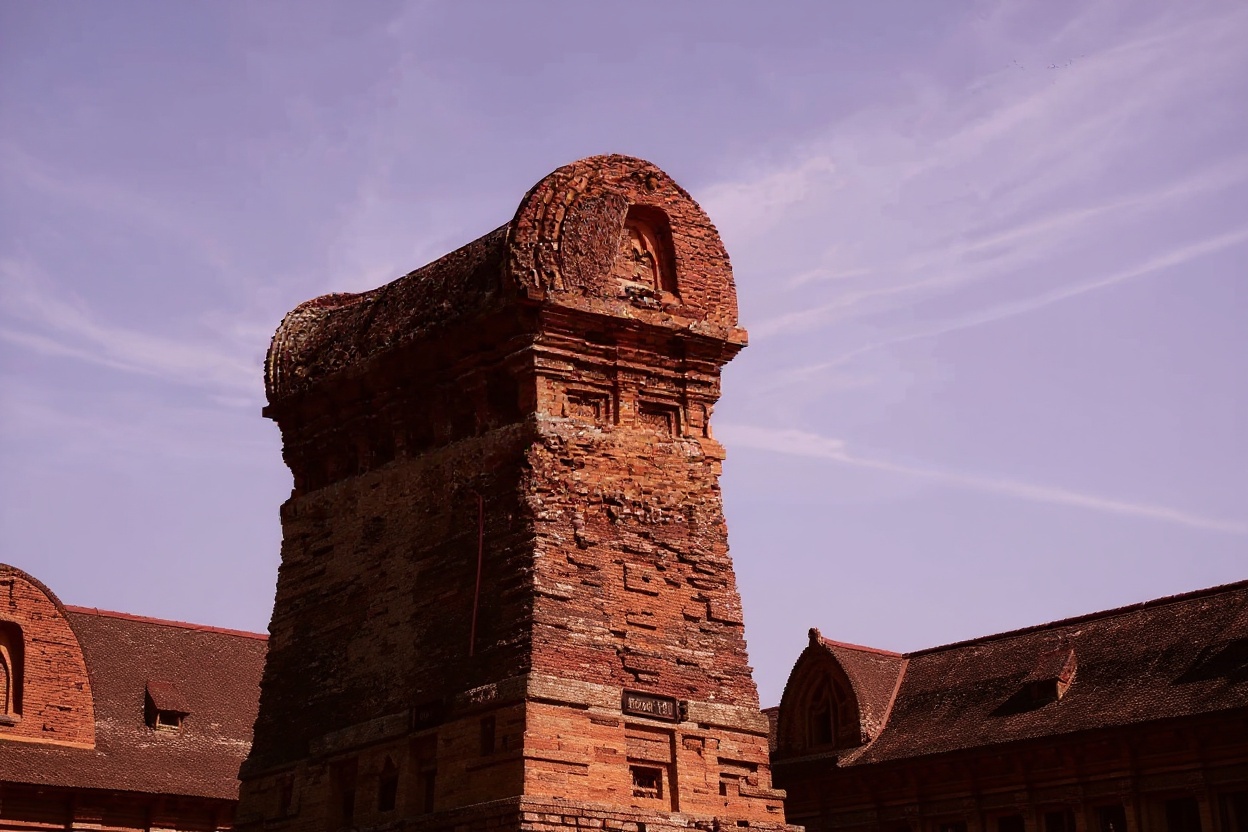
The Tháp Đôi towers in Quy Nhon city are the most accessible Cham site in the area — two towers from the 12th–13th century, well-maintained, free to view up close. The taller tower is 20 meters with a tiered roof in the classic Cham style; the smaller one is thought to have been a repository. They’re 2km from the city center and passed by virtually every traveler without stopping. Stop.
Further from Quy Nhon (about 50km north near An Nhơn town): Tháp Bánh Ít and Tháp Dương Long are two more extensive Cham sites with multiple towers and better-preserved carvings. Dương Long has three towers side by side that are among the tallest surviving Cham towers in Vietnam. Motorbike day trip from Quy Nhon: combine with the drive up the coast, 2–3 hours. Bring water and Google Maps offline — the signs are sparse.
The Cham context matters for understanding the character of Quy Nhon beyond the beach. This is a place with 2,000 years of history that most travel literature ignores because it doesn’t photograph as neatly as Hội An’s yellow walls. The complexity is part of what makes it worth more than a day.
Where to Stay in Quy Nhon
The range is budget guesthouses to mid-range beach hotels. No major international chains yet — the Avani property at Nhơn Hội beach is the closest to a resort-style option and genuinely good if you want facilities. For most independent travelers, the right choice is staying near the city beach promenade for easy beach access and the evening food stalls.
Budget (under 400,000 VND/night, ~$15): The Sinh Café area near Bạch Đằng Street has several guesthouses in the 200,000–350,000 VND range that are clean, functional, and within walking distance of everything. Air conditioning is standard at this price point in Quy Nhon.
Mid-range (600,000–1,500,000 VND/night, ~$23–57): Several beach-facing hotels along Xuân Diệu Street have sea-view rooms in this range. Check Booking.com for current availability — occupancy is inconsistent and prices fluctuate significantly between Vietnamese public holidays and weekdays.
For Bãi Xép beach specifically: a handful of small guesthouses operate directly on or near the beach for 300,000–600,000 VND/night (~$11.40–22.80). Staying at Bãi Xép means a 20-minute ride to Quy Nhon city for food and activities — worth considering for anyone prioritizing beach access over city convenience.
Best Time to Visit Quy Nhon
Vietnam’s central coast is defined by its weather window. Quy Nhon’s dry season runs March through September — clear skies, calm water, temperatures 28–34°C. The shoulder months (March and September) are the practical sweet spot: good weather, lower accommodation prices, and fewer Vietnamese domestic tourists than the peak June–August holiday period.
October through January is the typhoon and rain season. Unlike some parts of Vietnam where “rainy season” means afternoon showers, central Vietnam’s wet season is serious — typhoons hit this coast regularly between October and December, and multiday rain events make beach travel genuinely unpleasant. Quy Nhon gets hit harder than Nha Trang because it sits more directly in the typhoon path.
February is a transition month — weather improving, prices still low. If you’re combining Quy Nhon with Hội An or Đà Nẵng, this can work well as part of a central Vietnam circuit in early spring.
What I Got Wrong About Quy Nhon
My first day I stayed on the city beach. Walked the promenade, ate at the tourist-facing restaurants, concluded it was nice but probably didn’t justify the extra travel time over Nha Trang. Classic Jake error: judging the destination by what’s immediately visible from the accommodation you booked on autopilot on day one, without renting transport and seeing what’s actually around.
The second morning I rented a motorbike for 120,000 VND (~$4.55) and drove south without a plan. Thirty minutes of riding the coastal road past limestone outcrops and fishing villages led me to Bãi Xép. There was one other foreign face on the beach that day — a French woman reading a novel under a palm tree who’d been there for a week and had no plans to leave. I understood immediately. I turned around, checked out of my hotel, found a guesthouse at the far end of Bãi Xép for 280,000 VND/night (~$10.65), and stayed three more days.
The lesson isn’t specific to Quy Nhon — it’s the general Vietnam lesson. The good version of any place is usually not on the main street near the bus station. Rent the motorbike. Drive until you find the beach you didn’t know was there.
Quy Nhon Beach FAQ
Is Quy Nhon worth visiting?
Yes — if you’re interested in what an authentic Vietnamese coastal city looks like before significant tourism development. The beaches near the city (Bãi Xép, Kỳ Co) are genuinely excellent. Seafood is cheap and fresh. The city functions for locals rather than tourists. The trade-off: less English spoken, fewer international-standard facilities. It’s currently at the stage that Hội An was in the early 2000s — get there before that changes.
How do I get from Hội An to Quy Nhon?
Bus is the easiest option — open-tour bus tickets from Hội An to Quy Nhon run 150,000–200,000 VND (~$5.70–7.60) and take 4–5 hours. Alternatively, train from Đà Nẵng station (15km north of Hội An) to Diêu Trì, then Grab to Quy Nhon city. The train runs 4–5 hours and is more scenic on this coastal stretch. Book train tickets in advance at vé.vn or 12go.asia; buses have more flexible availability.
What are the best beaches near Quy Nhon?
In order of recommendation: Bãi Xép (12km south, scenic fishing village, good swimming), Kỳ Co Island (boat from Nhơn Lý pier, turquoise water, best for photographs), Eo Gió headland (25km north, dramatic rocky coastline, no swimming but worth seeing), and the city beach (convenient, good for evening walks and street food). Motorbike rental is the best way to reach Bãi Xép and Eo Gió — 100,000–150,000 VND/day in the city.