Last updated: June 2026 — seasonal conditions verified June 2026.
The rice terrace harvest window is short and the crowds arrive fast when it opens — our Mu Cang Chai rice terraces guide breaks down exactly which weeks to target.
Most guides tell you to come for the harvest. They’re not wrong. The golden terraces in late September are spectacular and the photographs are genuinely what you’ve seen in the travel media. But the guides don’t give you the honest comparison: the water pouring season in late May produces photographs that some photographers prefer to harvest, costs less because accommodation prices are lower in the off-peak, and lets you stand on a viewpoint platform without waiting for a tour group to move.
Three seasons. Three different versions of the same place. Here’s which one you should actually book.
Season 1: Golden Harvest — Mid-September to Mid-October
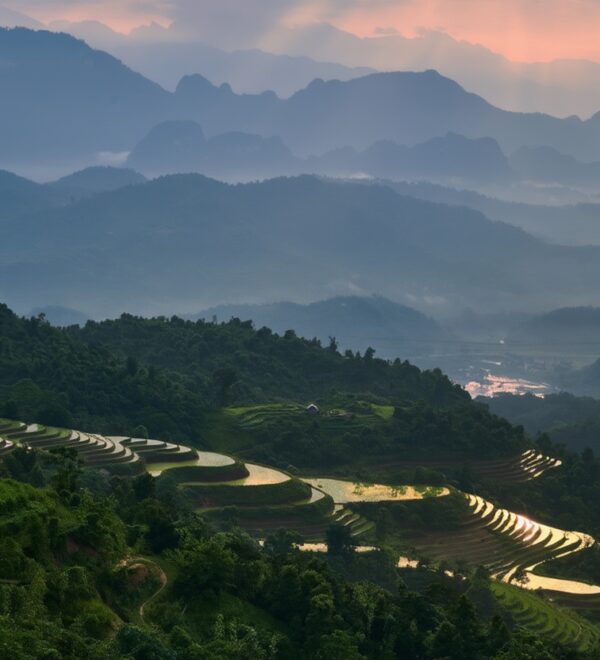
This is the season that made Mù Cang Chải internationally famous. The rice ripens from bright green through amber to deep gold, the color change moving down the mountain as the season advances — higher fields first, lower fields later — which means at peak, you can often see all three stages simultaneously on a single mountainside. Morning mist fills the valleys. The light at dawn in September at 1,000m elevation hits the golden terraces at angles that landscape photographers specifically travel for.
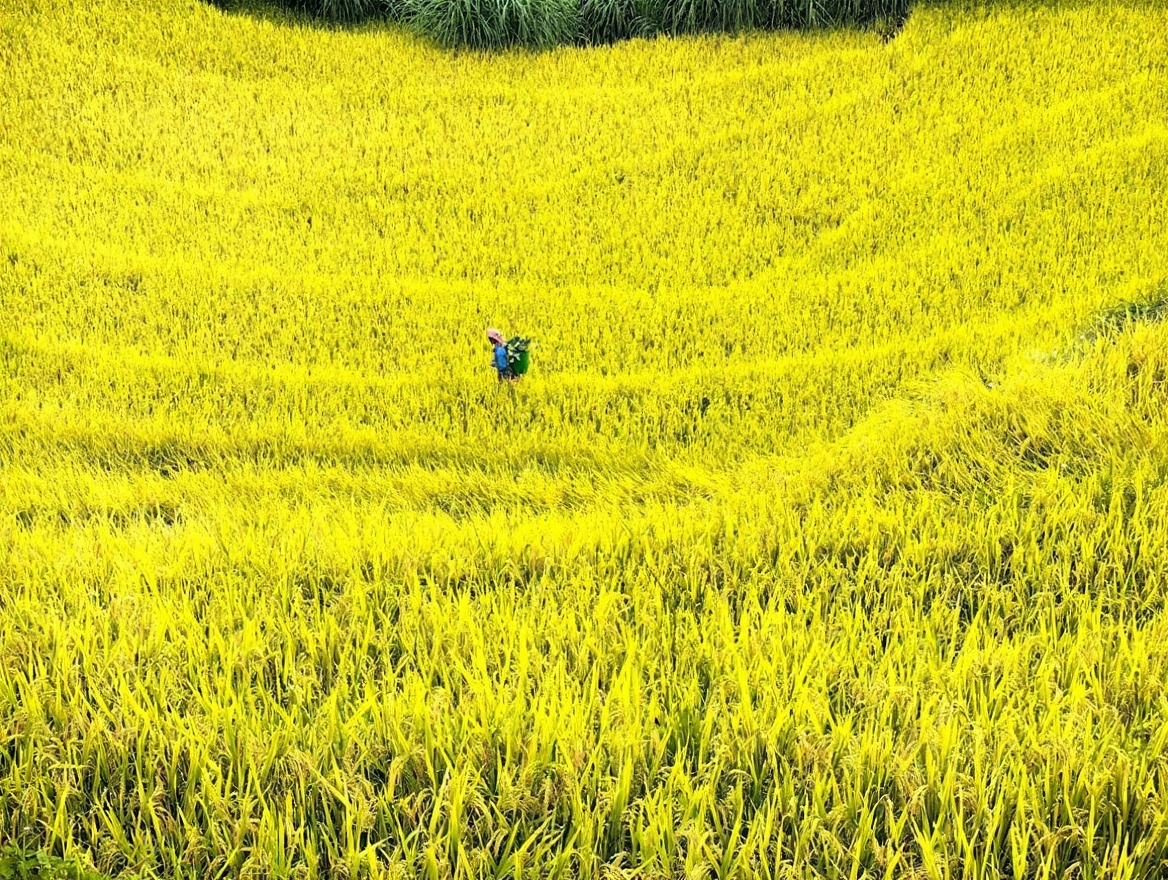
The peak color window is approximately September 20 to October 10 in a normal monsoon year. It varies by 1–2 weeks depending on when the monsoon ends and how much warmth the mountain gets in early September. Higher elevation terraces (Dế Xu Phình, upper La Pan Tán) turn earlier. Lower valley fields turn later. In a good year, the full color sequence takes about 3 weeks to complete across the whole 2,200-hectare area.
✓Quick Answer
The exact golden harvest peak shifts every year — don’t trust fixed dates. Check Instagram (#mucangchai) in the week before your planned visit to see current field colors from travelers already there. In most years: first golden color appears around September 15–20 at the highest elevations; peak across La Pan Tán around September 25 – October 5; lower fields still golden through mid-October.
Crowds: This is the busiest period in Mù Cang Chải. The Paragliding Festival (late September to early October) brings tour groups, domestic Vietnamese visitors, and international photographers simultaneously. The Mâm Xôi Hill viewpoint on a Saturday in early October will have people queuing. Go on a weekday. Arrive before 7am. The difference between the 6am platform experience and the 10am experience is the difference between the trip you planned and a viewpoint visit.
Accommodation: Book La Pan Tán homestays at least 4–6 weeks in advance for peak harvest. The better options with terrace views fill up in September. Mù Cang Chải town hotels have more availability but leave you 18km from the viewpoints.
What to do in harvest season beyond the viewpoints: The Paragliding Festival runs simultaneously — tandem flights over the golden terraces at 1,500,000–2,500,000 VND (~$57–95) give you the landscape from above. The Saturday market in town is at its most active in harvest season — local families bring produce and crafts. Village trekking in Che Cu Nha is still excellent — the harvest activity (families cutting rice by hand, water buffalo on the terraces) adds a working-landscape dimension that the viewpoints don’t capture.
Motorbike logistics in harvest season: Motorbike rentals in Mù Cang Chải town get claimed early on the morning after the overnight bus arrives. If you’re arriving at dawn during peak season, either arrange a rental the day before (contact your homestay to pre-book) or accept walking or hiring a xe ôm (motorbike taxi) for the first morning. The 18km to La Pan Tán at dawn without a confirmed rental is a problem you can solve in advance by messaging ahead.
Season 2: Water Pouring — Late May to Mid-June
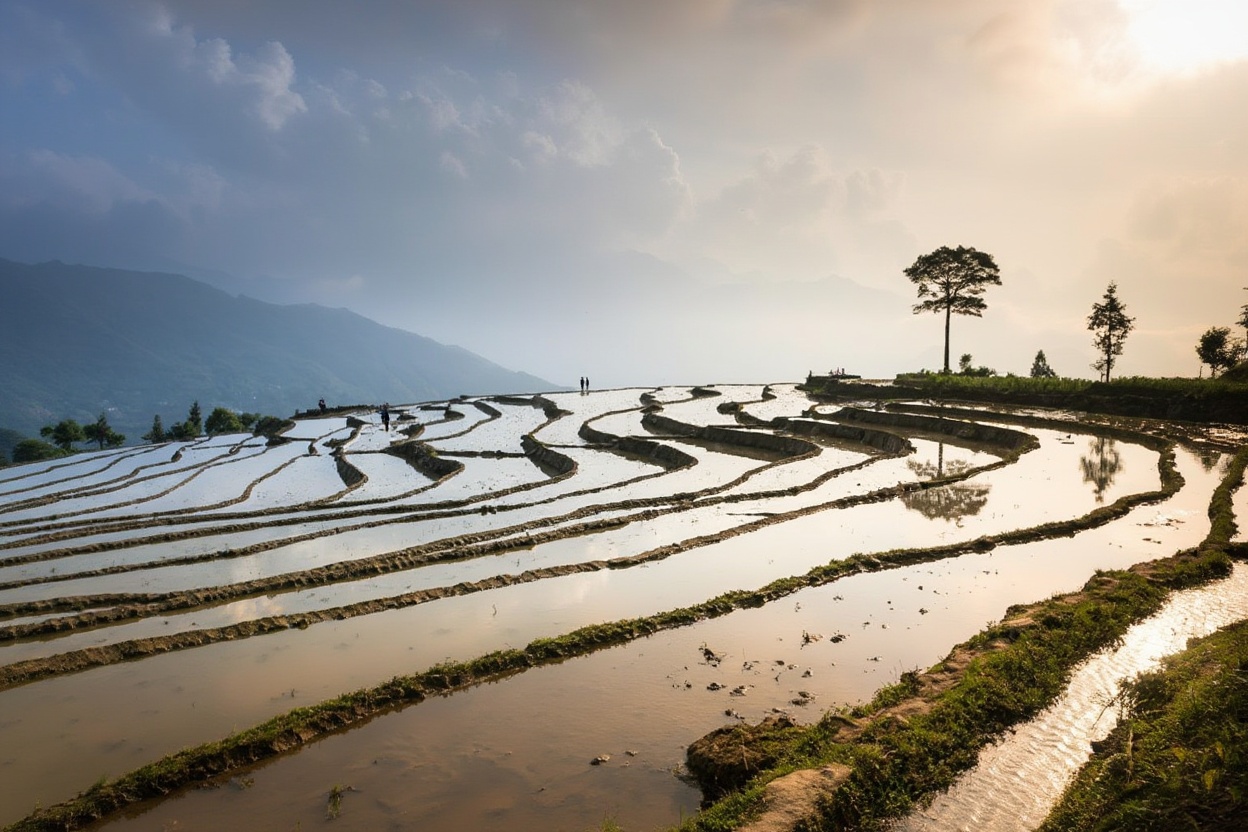
Farmers flood the terraces in late May to prepare for rice planting. The filled fields become mirrors — flat surfaces of water reflecting the sky and clouds, the mountains above doubled in the water below. On a clear morning with blue sky, the effect is genuinely disorienting: hundreds of silver-blue mirrors arranged in horizontal steps across a mountain, the clouds reflected in each one at a slightly different angle.
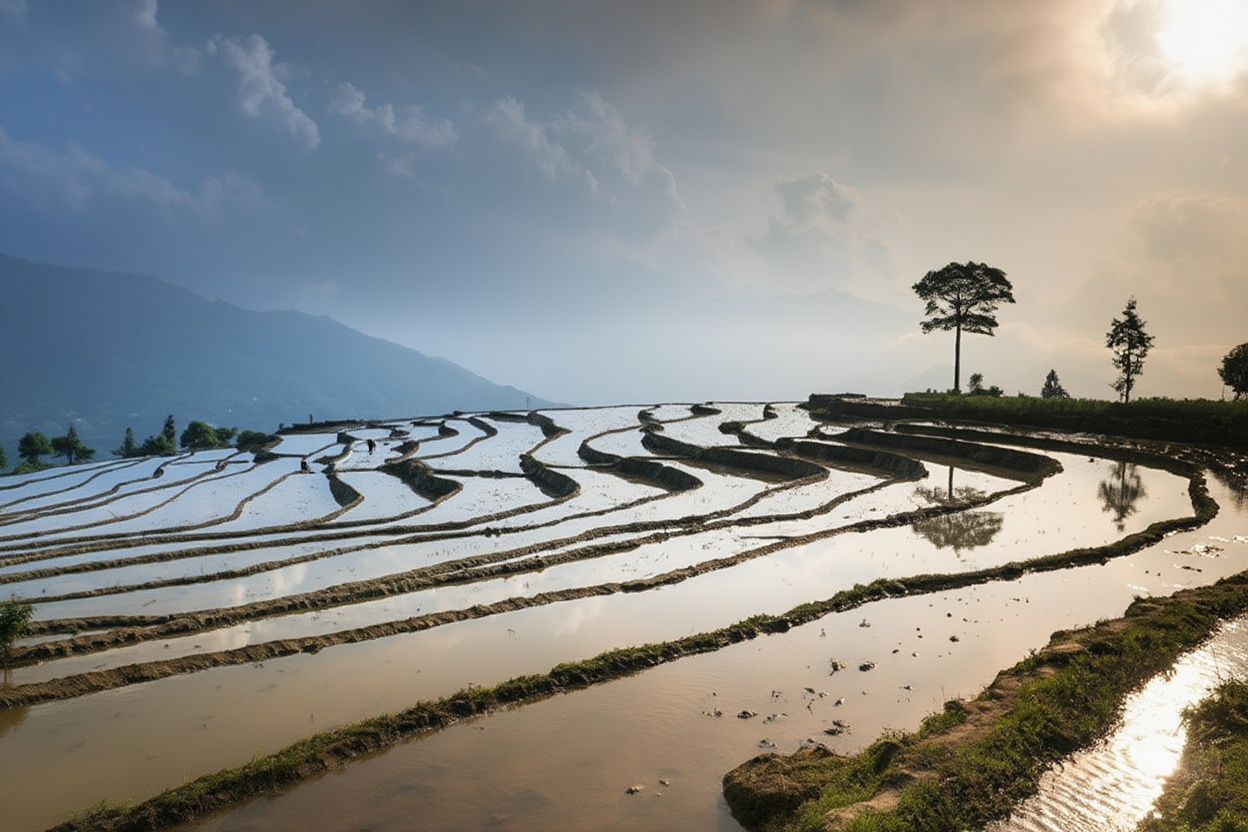
The visual grammar of water season is completely different from harvest. Harvest is warm — amber, gold, the colors of late-season grain. Water season is cool — blue, silver, the color of sky and cloud in shallow water. Photographers who’ve done both often say they prefer the water season for the strangeness of it — it doesn’t look like a rice field, it looks like the mountain is covered in broken glass reflecting the sky.
✓Quick Answer
Water pouring season runs late May to mid-June. Fields flood in sequence — La Pan Tán first, then Che Cu Nha and Dế Xu Phình. Clear morning sky is essential for the mirror effect; overcast produces flat grey reflection. The peak “full mirrors” period is about 2 weeks — roughly June 1–15 in a normal year. After mid-June the planting starts and the reflective water is replaced by muddy green seedlings.
Crowds: Significantly lower than harvest. No festival. Fewer tour groups. The viewpoint platforms at Mâm Xôi have space to move in. Weekday mornings you may be the only foreign visitor at the site.
Weather risk: Late May–June can bring afternoon thunderstorms and some overcast mornings. The mirror effect requires clear sky — if you arrive to grey overcast, the terraces still look interesting but not spectacular. Build flexibility into your schedule: plan 3 nights so you get at least 2 clear mornings even if one is overcast.
★Jake’s Pick
Water pouring season is the right choice for anyone who cares about photography without the harvest crowds. The visual quality is equal to harvest — arguably more unusual and harder to find in other destinations. Book for late May or early June, stay 3 nights, and you’ll have the same spectacular landscape photographs as the harvest visitors with a fraction of the crowd pressure.
Season 3: Green Growth — July to August
The rice is planted and growing — the terraces are a saturated, almost fluorescent green. For photography, this is the weakest season: green terraces are tonally similar to the surrounding forest, making it hard to separate the terrace system visually from the landscape it sits in. The mist is heavier and more persistent through the summer, which can be atmospheric but also frequently means overcast morning light rather than the clean dawn glow of the other two seasons.
For trekking, this is the best season. The paths between H’Mông villages are passable, the community is actively working the fields, the vegetation is lush, and the temperature — warm but not as hot as lowland Vietnam in July — is comfortable for full-day walks. The green growth season is when Mù Cang Chải is most like a living agricultural landscape rather than a photography destination, which is a different and valid kind of trip.
The heat at midday in July–August (25–30°C) makes the terrace viewpoints uncomfortable from around 11am. Structure your days accordingly: early morning for any photography or viewpoint visits, midday break at the homestay or a village café, late afternoon for trekking when the heat drops. The mist in the mornings is heavier and more persistent than in harvest season — this can be atmospheric (a white sea filling the valleys below) or frustrating (complete cloud cover all morning). Accept the variability and plan for 3 nights minimum to get 2 clear morning sessions.
Crowds: Moderate. Fewer photographers, more trekking-focused visitors. Vietnamese domestic tourists come in smaller numbers than harvest. Accommodation available with less advance booking — booking 1–2 weeks ahead is sufficient for most La Pan Tán homestays in July–August.
Who should come in green season: Travelers who prioritize village trekking and authentic community interaction over landscape photography. People who want to hire a local guide in Che Cu Nha and spend 2 days walking through working farmland rather than standing on viewpoint platforms. Those who’ve already done Mù Cang Chải at harvest and want to see it in a different form. Budget travelers who want the La Pan Tán homestay experience without peak-season pricing.
When NOT to Come — November to April
After the October harvest, farmers cut the rice and the terraces return to bare earth and stubble. From November through April, Mù Cang Chải has no visual appeal — the terraces are empty brown mud, the mountain is cold and frequently misty in the wrong way (grey, not atmospheric), and there’s nothing at the viewpoints worth making an 8-hour bus journey for.
November to February is cold at 1,000m elevation — 8–15°C, occasionally dropping to single digits at night. If you’re passing through for a different reason (traveling the northwest mountain circuit in winter), Mù Cang Chải is worth a look at the landscape. As a destination in itself, it’s not worth the journey in the off-season.
March to April is the pre-planting period — families prepare the terraces, repair walls, and maintain the irrigation channels. The terraces themselves are bare but the community activity is visible. If you have a specific interest in the agricultural process and are willing to spend time in the villages learning about terrace maintenance rather than photographing rice fields, spring has its own interest. For everyone else, this is still the wrong season.
One exception: if you’re doing a general northwest Vietnam circuit (Hanoi → Mù Cang Chải → Sapa → Ha Giang → back) and your dates fall outside the good seasons, Mù Cang Chải town is a reasonable overnight stop on the route. The mountain scenery, the H’Mông market if it’s a Saturday, and the Khau Phạ Pass road are worth experiencing regardless of terrace season. Just calibrate your expectations: you’re passing through, not making the trip you’d make if you planned it for harvest or water season.
Practical Packing by Season
Harvest season (Sep–Oct): Warm layer mandatory for dawn — 10–15°C at 5am. Sunscreen for the viewpoints (the black basalt and bare rock reflects heat in the midday hours). Rain jacket for afternoon showers that occasionally come through even in “dry” September. Cash for the peak-season accommodation and activity prices.
Water season (May–Jun): Light rain jacket essential — afternoon storms come in fast. Warm layer still needed for dawn (15–18°C at 6am). Rubber-soled shoes or sandals that can get wet — the path to and around the flooded terraces is muddy. Less cash needed than harvest season — prices are lower across accommodation and activities.
Green season (Jul–Aug): Full rain jacket — not a packable windbreaker, an actual waterproof. Leech socks if you’re trekking in the wet vegetation (local pharmacies in Mù Cang Chải town sell them). Insect repellent for the village trekking. Light long sleeves for the terrace path walking. Everything you’d pack for humid tropical trekking, with a layer for the cool mornings at 1,000m.
How to Check Current Conditions Before You Go
The most reliable way to know if Mù Cang Chải is at peak color right now is to look at what travelers who arrived 3 days ago are posting. Instagram and Facebook groups are more accurate than any guide’s published dates.
Instagram: Search #mucangchai and filter by recent. Photos from the last 7 days will show you exactly what color the terraces are at this moment. If you see golden fields in the images: go now. If you see bare brown terraces: wait.
Vietnam travel Facebook groups: The “Vietnam Travel Community” and “Vietnam Expats & Travelers” groups on Facebook regularly have posts from Mù Cang Chải during harvest season. Someone asks “is it peak now?” almost every day in late September — the responses from people who are currently there are the most accurate data available.
Photography Tips by Season
The same viewpoint looks completely different depending on when you’re there. A few technical notes that matter for each season:
Harvest season photography: The golden color peaks in the early morning before 8am — the warm light from the east catches the rice and deepens the color. By 10am the light is overhead and the terraces look flat. Bring a polarizing filter if you shoot with a camera: it cuts the haze and deepens the blue sky contrast against the gold. The mist in the valleys before 8am gives the depth that makes the harvest photographs what they are — the terraces emerging from white fog rather than sitting in clear air. If your first morning is foggy and you can’t see the terraces: that’s the correct condition. Wait for the mist to dissolve. The 7–8am window when the mist lifts is the best 30 minutes in Mù Cang Chải photography.
Water season photography: The mirror effect requires clear sky and calm air — wind breaks the water surface and kills the reflection. Early morning before 8am when the air is still is the window. Shoot from the viewpoint platforms looking down into the flooded terraces, not from ground level where the angle is wrong for the reflection. Wide-angle lens captures the full scale; telephoto compresses the terrace layers into a more abstract pattern. Both are valid; both require arriving before the wind picks up.
Green season photography: Challenging — use the mist and fog to your advantage rather than fighting it. Partial mist that reveals the terrace geometry while hiding the background is the green season’s signature look. Shoot at f/11 or smaller for depth; bracket exposures because the contrast between bright green terraces and dark forest background is higher than other seasons. Accept that wide-open golden-light harvest shots are not the goal and work with the atmospheric quality instead.
For the complete logistics of getting there and planning the trip, the Mù Cang Chải travel guide covers transport, accommodation, and itinerary. For the bus details from Hanoi specifically, the Hanoi to Mù Cang Chải transport guide has every detail.
Frequently Asked Questions
When is Mù Cang Chải harvest season?
Golden harvest typically peaks from mid-September to mid-October, with the exact window varying 1–2 weeks depending on the monsoon. Peak color at La Pan Tán (the main viewpoint area) usually falls around September 25 – October 5 in a normal year. Higher elevation terraces (Dế Xu Phình) turn earlier; lower valley terraces last longer. Check Instagram #mucangchai in the week before your visit for current conditions.
Is water pouring season worth visiting Mù Cang Chải?
Yes — and it’s underrated. The flooded terraces in late May–June produce a mirror reflection effect that’s visually different from harvest but equally spectacular. Crowds are lower, accommodation prices are lower, and viewpoint platforms have space. The trade-off: you need a clear morning sky for the mirror effect, and late May brings some overcast days. Plan 3 nights to guarantee at least 2 clear morning sessions.
Can I visit Mù Cang Chải in July or August?
Yes, but with adjusted expectations. July–August is the green growth season — the terraces are a saturated green, which is beautiful in its own way but much harder to photograph dramatically. The real reason to come in July–August is for trekking: the paths are accessible, the community is actively farming, and the mist and green give the landscape an atmospheric quality that’s different from the peak seasons. Not the season for viewpoint photography; the season for full-day village trekking.
What’s the weather like in Mù Cang Chải?
At 1,000m elevation, Mù Cang Chải is cooler than Hanoi year-round. Harvest season (September–October): 18–25°C daytime, 10–15°C at dawn. Water season (May–June): 22–28°C daytime, 15–18°C at dawn. Green growth (July–August): 22–30°C with high humidity and afternoon rain. Winter (November–February): 5–15°C, cold at night, occasional frost at the highest elevations. Pack layers for any season — the temperature swing between dawn and midday is significant.
Two things worth sorting before you land: a Vietnam eSIM so you have data the moment you clear customs, and travel insurance — medical costs for uninsured foreigners in Vietnam are significant.
Airalo eSIMs activate instantly. Buy before departure — airport SIM queues in Vietnam can take 30+ minutes.
The Honest Verdict
If your schedule is flexible: water pouring season in late May gives you the better experience — equal visual quality to harvest, half the crowds, more space to actually move through the landscape. The harvest gets the press, but the water season is the smarter choice.
If your schedule is fixed and it falls in late September: come anyway. The harvest crowds are real but the landscape is genuinely extraordinary. Go early, go on weekdays, stay 3 nights, and you’ll get the shots and the experience. The crowds at 10am on the viewpoint don’t change what the same viewpoint looks like at 6am with the mist in the valley.
Whatever season you choose: the key variable is clear sky on the first morning. Everything else — the bus, the homestay, the motorbike — is logistics. The light is the trip.
One last thing: Mù Cang Chải doesn’t care when you planned to come. The terraces color on their own schedule, the mist rises on its own terms, and the weather doesn’t consult your calendar before deciding whether Tuesday is a clear morning or a grey one. Build flexibility into whichever season you choose — the travelers who leave Mù Cang Chải with the best experience are almost always the ones who extended their stay by one extra morning because the light was finally right. Book 3 nights, keep a mental note that 4 is available, and see what the weather decides.