Last updated: June 2026 — prices and schedules verified June 2026.
The first time I made this trip I winged it. Showed up at Mien Dong at noon on a Saturday, confident I’d just get on something. The next bus with a sleeper berth wasn’t until 4pm, and the one after that was sold out entirely. I ended up in a sitting bus that smelled like someone’s lunch for six hours.
Book ahead. It’s a simple rule but a lot of travelers ignore it until they’re standing at a bus station learning the lesson the hard way.

Saigon to Ninh Thuận by Sleeper Bus — The Main Option
✓Quick Answer
Sleeper bus from Mien Dong Bus Station: 6-7 hours, 200,000–280,000 VND (~$7.60–$10.60). Multiple operators daily. Book through 12Go for advance tickets and schedule comparison. Buses drop off at Phan Rang bus station, central for guesthouse access.
This is how 90% of budget travelers make this trip, and it’s the right call.
The journey covers 350km down National Route 1 — flat coastal road through Bình Thuận and into Ninh Thuận province. Vietnamese sleeper buses run reclining berths stacked two high, and while they’re not luxury, they’re genuinely comfortable for a 6-7 hour run. Most have air-conditioning that works and a small TV playing Vietnamese pop at a volume nobody asked for.
Departure point: Ben Xe Mien Dong (Mien Dong Bus Station), District 9 — reachable from central Saigon by taxi/Grab for around 100,000-150,000 VND (~$3.80-$5.70), or via metro to Suoi Tien then local transport.
Arrival point: Phan Rang Bus Station (Ben Xe Phan Rang), central Phan Rang-Tháp Chàm. Most guesthouses are within 10 minutes by xe ôm (say: say-ohm — motorbike taxi).
Book through 12Go — compare operators, departure times, and confirm the berth type before you pay. Futa Bus and Thanh Buoi are the most reliable operators on this route as of June 2026.
↗Insider Tip
The overnight bus departing around 10-11pm from Mien Dong gets you into Phan Rang around 5-6am — perfect timing to grab breakfast and head straight to Nam Cuong dunes at dawn without wasting a day in transit. If you can sleep on buses, this is the best option.
Fly from Saigon to Cam Ranh (Then Bus to Ninh Thuận)
✓Quick Answer
Fly Saigon (SGN) to Cam Ranh (CXR) — 1 hour, from ~$30-80 depending on timing. Add a 1.5-hour bus or taxi from Cam Ranh to Phan Rang (65km south). Total door-to-door: 3-4 hours. Only worth it if your time is tight or flights are cheap.
There’s no airport in Ninh Thuận. The nearest is Cam Ranh International Airport (CXR) — Nha Trang’s airport, 65km north of Phan Rang.
VietJet, Vietnam Airlines, and Bamboo Airways all fly this route daily. Flight time is around 55 minutes. Check fares on Kiwi.com — they aggregate all Vietnamese carriers and often find cheaper combinations than booking direct.
From Cam Ranh airport to Phan Rang: local buses run for 60,000-80,000 VND (~$2.30-$3.05), or grab a taxi for around 300,000-400,000 VND (~$11.40-$15.20). Airport transfer via Kiwitaxi runs ~$20-25 and lets you book in advance with a set price — useful if you’re arriving late at night when negotiating with random drivers is less fun.
⚠Real Talk
Flying only makes financial sense if you find fares under $40 and value the time saved. At $60-80+ for the flight plus $15-20 for the airport-to-Phan Rang leg, you’re paying $75-100 for a journey that a $10 sleeper bus also does — just more slowly. If you have more than 4 days in the region, take the bus.
Private Car or Transfer — When It Makes Sense
350km in a private car takes the same 6-7 hours as the bus — Route 1 has no highway shortcut. What you get is door-to-door comfort, luggage space, and the ability to stop en route.
Price range: $45-65 for a 4-seat car, $65-90 for a 7-seat van. Split between 3-4 people, it becomes competitive with the bus — and significantly more comfortable if you’re traveling with a family or heavy packs.
Book through GetTransfer.com for fixed-price quotes with verified drivers — no haggling at the station, no surprise surcharges at the destination. Kiwitaxi covers the same route with English-language booking.
→Who It’s For
Private car makes sense for: families with young kids, travelers with a lot of gear, groups of 3+ splitting the cost, anyone who gets severely motion-sick on buses. Skip it if you’re solo or on a budget — the price difference doesn’t justify it.
Motorbike — The Scenic Option for Experienced Riders
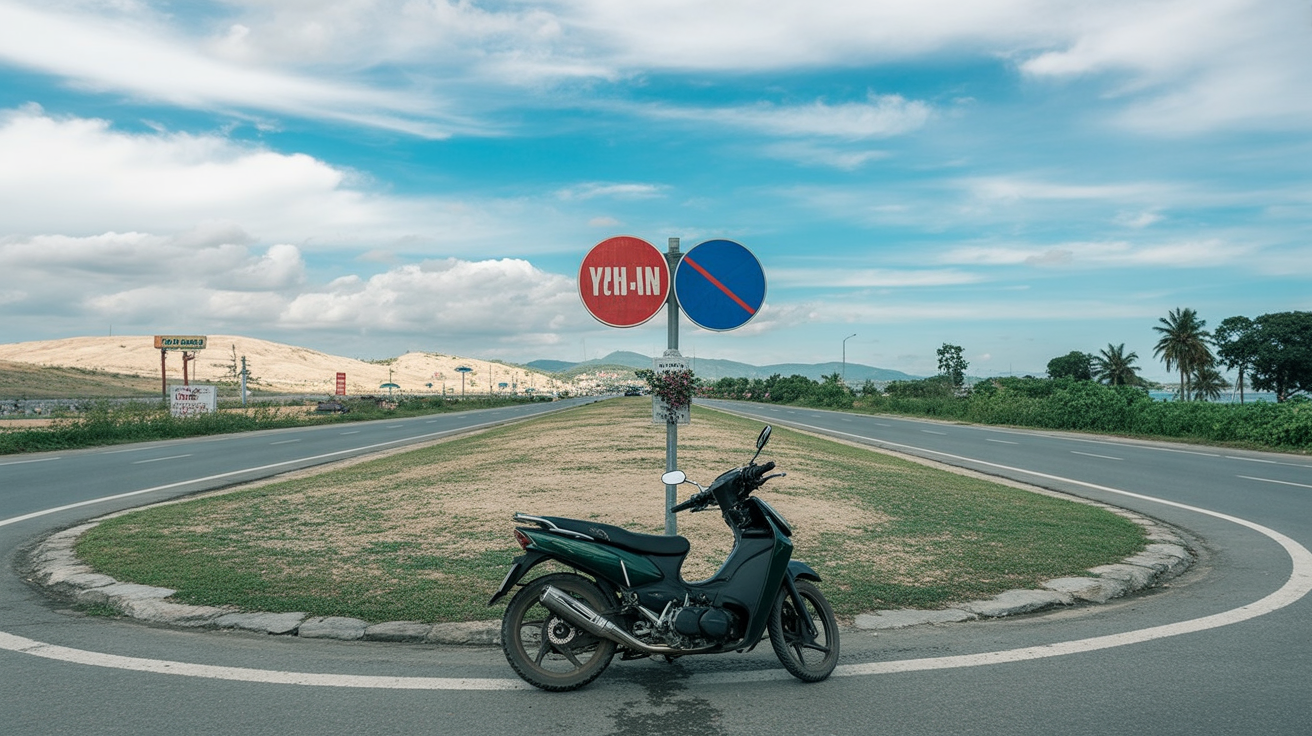
350km on National Route 1. Flat coastal road through Bình Thuận, some sections of dual carriageway, some busy single-lane stretches shared with trucks. Doable in a single long day if you leave Saigon by 6am — but a genuine 8-10 hours of riding, not a relaxed cruise.
More sensible version: break it into two days. Stop overnight at Phan Thiết (Mũi Né area) — 200km from Saigon — then continue 150km to Phan Rang the next morning. This also gives you time at the Mũi Né dunes if you haven’t done them.
Fuel cost for the full 350km: around 150,000-200,000 VND (~$5.70-$7.60) depending on your bike’s efficiency. Route 1 has petrol stations every 20-30km.
ℹKnow Before You Go
The section through Bình Thuận province has long, straight stretches where trucks drive fast and passing is aggressive. If you’re not an experienced Vietnam road rider — someone who’s already done 500km+ on Vietnamese roads — take the bus. This route isn’t dangerous, but it punishes overconfidence.
For everything on motorbike travel in Vietnam, see our Vietnam motorbike guide.
The Train Option — Tháp Chàm Station

✓Quick Answer
Train from Saigon to Tháp Chàm (Phan Rang): 5.5 to 8 hours depending on service, 150,000–350,000 VND (~$5.70–$13.30). Fewer daily services than buses, but a smoother ride and better scenery through Bình Thuận. Book through 12Go or the Vietnam Railways website.
Tháp Chàm station sits on Vietnam’s main North-South rail line, 4km from central Phan Rang. It’s a proper railway station — not a rural halt — with regular service in both directions.
The SE (Saigon Express) trains make the run in 5.5-7 hours depending on which service you catch. The slower TN (Thống Nhất) services take up to 8 hours but stop at more stations and are significantly cheaper.
Ticket prices:
Hard seat: 150,000-180,000 VND (~$5.70-$6.83) — fine for the daytime but a long time sitting upright at night.
Soft seat: 200,000-250,000 VND (~$7.60-$9.50) — air-conditioned, more comfortable for 6+ hours.
Soft sleeper (6-berth): 280,000-350,000 VND (~$10.60-$13.30) — comparable to the bus sleeper but with the advantage of being a proper berth rather than a reclining chair.
Book through 12Go — they list Vietnamese Railways alongside bus operators so you can compare times and prices in one place. The official Vietnam Railways website (dsvn.vn) works but the booking interface is clunky for non-Vietnamese speakers.
⚠Real Talk
The train is genuinely more comfortable than the bus for the daytime journey — the coastal scenery through Bình Thuận is better from a train window than a bus, and you can walk to a dining car for coffee. The downside: fewer departures, and getting from Tháp Chàm station to your guesthouse requires an extra xe ôm ride (15,000-20,000 VND). Bus stations in Vietnam are almost always more central.
Step-by-Step: Booking the Bus from Saigon
For anyone doing this for the first time, here’s the exact process:
Step 1 — Choose your operator. Futa Bus (Phương Trang) and Thanh Buoi are the two most reliable operators on the Saigon–Phan Rang route as of June 2026. Both run modern sleeper coaches with working air-con and on-time track records. Avoid unknown operators with no reviews.
Step 2 — Compare times on 12Go. Filter by departure time — decide whether you want a daytime run (depart 7-9am, arrive 2-3pm) or overnight (depart 9-11pm, arrive 4-6am). Overnight is often cheaper and saves a night’s accommodation.
Step 3 — Choose your berth. On a standard sleeper coach, berths are numbered front to back, bottom-top. Front bottom berths have slightly more legroom. Top berths have more privacy but require climbing. Avoid the very back row — these recline less and have engine noise.
Step 4 — Get to Mien Dong early. Add 30 minutes to your estimated travel time from wherever you’re staying in Saigon. The station has a confusing layout and multiple departure bays. Allow time to find your bus — your ticket will have a bay number, but bus staff also check tickets at the gate.
Step 5 — Arrive in Phan Rang. Buses drop at Ben Xe Phan Rang. Take a xe ôm (agree a price first — 20,000-30,000 VND/~$0.75-$1.14 to most guesthouses) or Grab if you have data.
Getting to Mien Dong Bus Station from Central Saigon
Mien Dong Bus Station is in District 9 — roughly 10-15km from the backpacker district (Bùi Viện) and Phạm Ngũ Lão.
Options to get there:
Grab: 80,000-150,000 VND (~$3.05-$5.70) depending on traffic and starting point. Most reliable option — fixed price, drops directly at the terminal entrance.
Metro Line 1: From Bến Thành station (central) to Bình Thái or Thủ Đức stations, then local bus or xe ôm to Mien Dong. Takes 45-60 minutes, costs 20,000-30,000 VND (~$0.75-$1.14) for the metro leg. Cheapest option but adds complexity with luggage.
Taxi: Similar pricing to Grab but meter-based — confirm the driver is using the meter or agree a price upfront. Mai Linh and Vinasun are the two reputable taxi companies.
Add at least 45 minutes travel time from central Saigon to the station — rush hour (7-9am, 4-7pm) can double that.
The Route: What You Pass Through
350km of National Route 1 — the spine of Vietnam’s road network, running from the Chinese border all the way to Cà Mau in the far south.
Leaving Saigon the road cuts through sprawling industrial zones before breaking into Bình Thuận province — flat coastal plains, dragon fruit farms, and the unmistakable red-orange landscape that signals you’re entering the dry south-central zone. Around the 3-hour mark you’ll pass Phan Thiết — the jumping-off point for Mũi Né — and the road hugs closer to the coast.
The final 100km into Ninh Thuận feels different from the rest of Vietnam. Drier. Windier. The vegetation changes — scrubby coastal plants replace the lush green of the north. By the time you see the first wind turbines on the hillsides near Phan Rang, you know you’ve arrived somewhere with its own character.
If you’re on a daytime bus, watch out the right-hand window on the approach to Phan Rang — you’ll see the red dunes of Nam Cuong rising from the flat land before you hit the town.
Combining with Mũi Né: The Two-Stop Option
If you haven’t been to Mũi Né, it’s worth considering a split journey — Saigon to Mũi Né (4-5 hours), one night in Mũi Né, then Mũi Né to Phan Rang (2.5-3 hours the following morning).
Both Mũi Né’s white sand dunes and Ninh Thuận’s red sand dunes share the same geological character — the dry south-central coast creates ideal dune conditions. Doing both in sequence gives you a complete picture of this stretch of Vietnam that most travelers miss entirely.
Buses between Mũi Né (Phan Thiết) and Phan Rang run regularly — check schedules and book on 12Go. Expect to pay 100,000-150,000 VND (~$3.80-$5.70) for the shorter leg.
What to Do Once You’re There
You made it to Phan Rang. First move: find your guesthouse, rent a motorbike, and plan tomorrow for the dunes at 6am.
The full breakdown of what to see, eat, and do is in our Ninh Thuận travel guide — including Po Klong Garai Cham towers, Vĩnh Hy Bay, Bầu Trúc pottery village, and the honest answer on whether Ninh Chữ or Bình Tiên beach is worth your time.
Most travelers combine Ninh Thuận with Nha Trang (65km north) — see our Nha Trang travel guide for that leg. Or continue 110km west up into the mountains to Đà Lạt — our Đà Lạt guide covers that route.
12Go compares all operators and departure times. Book at least a day ahead on weekends.
Tips for the Bus Journey
Six to seven hours is long enough to get uncomfortable if you’re unprepared. A few things that make the difference:
Bring a jacket. Vietnamese sleeper buses run the air-con at temperatures that would satisfy a penguin. You’ll be sweating outside at the station and hypothermic inside the bus. A light layer or a sarong for the journey is non-negotiable.
Eat before you board. Bus food stops exist — usually a 20-minute break at a highway rest stop around the halfway mark — but the food is overpriced and mediocre. Grab a bánh mì (say: bahn mee) near Mien Dong for 25,000-35,000 VND (~$0.95-$1.33) before you leave.
Download offline maps. Mobile signal gets patchy through some Bình Thuận stretches. Google Maps offline for the Phan Rang area means you’ll know where you are when you arrive, even without data.
Bring cash. Phan Rang has ATMs but they’re not as plentiful as Saigon. Withdraw enough before you leave — 500,000-1,000,000 VND (~$19-$38) covers your first two days comfortably.
Sit next to an aisle berth if you need the bathroom. The bus stops are infrequent and Vietnamese coaches don’t always have onboard toilets. Aisle access means you can get up without disturbing your neighbor if there’s an emergency stop.
Book the lower berth if you run tall. Top berths have less headroom — fine for sleeping, awkward for sitting upright during the journey. If you’re over 180cm, lower berth is worth specifically requesting when you book.
Before You Leave Saigon
Sort your Vietnam eSIM before heading south — Ninh Thuận has decent 4G coverage in Phan Rang town but patchy signal at the dunes and Vĩnh Hy Bay. Airalo Vietnam eSIM activates before you board and costs ~$5 for 7 days. Easier than hunting for a SIM shop in Phan Rang. See our Vietnam SIM card guide for all options.
For broader transport context across the country, our Vietnam sleeper bus guide covers what to expect, how to book, and which operators to trust.
Two things worth sorting before you land: a Vietnam eSIM so you have data the moment you clear customs, and travel insurance.
Frequently Asked Questions
How long does it take to get from Saigon to Ninh Thuận?
6 to 7 hours by sleeper bus — the most common option at 200,000-280,000 VND (~$7.60-$10.60). Flying to Cam Ranh (Nha Trang airport) cuts it to 3-4 hours total but costs significantly more. Private car takes the same time as the bus but offers door-to-door comfort.
Where does the bus from Saigon to Ninh Thuận depart from?
Mien Dong Bus Station (Ben Xe Mien Dong) in District 9. Reachable from central Saigon by Grab taxi for 100,000-150,000 VND (~$3.80-$5.70), or via the metro. Book your bus ticket through 12Go and check the exact departure bay when you arrive — large stations can be confusing.
Is there a train from Saigon to Ninh Thuận?
Yes — the North-South rail line stops at Tháp Chàm station in Phan Rang. Train takes 6-8 hours from Saigon depending on the service, priced similarly to the bus at 150,000-250,000 VND (~$5.70-$9.50) for hard seat, more for soft sleeper berths. Check schedules on 12Go. The train is more scenic but less frequent than buses.
Can I get from Saigon to Ninh Thuận in one day?
Yes — easily. A bus departing Saigon at 7-8am arrives Phan Rang by 2-3pm, giving you an afternoon in town. The overnight bus (~10pm departure) gets you there at dawn — ideal if you want to hit the dunes without wasting a day travelling. Same-day arrival is straightforward regardless of which option you choose.
What’s the cheapest way to get from Saigon to Ninh Thuận?
Sleeper bus at 200,000-280,000 VND (~$7.60-$10.60) — the cheapest comfortable option. Motorbike is cheaper on fuel alone (~150,000 VND) but requires experience and significantly more time. Avoid the false economy of a cheap sitting bus if you value your back on a 6-hour journey.
The sleeper bus is the right answer for almost everyone making this trip. Book through 12Go, grab the overnight service if you can sleep on a bus, and you’ll wake up in Phan Rang with a full day ahead of you.
What to do with that day — see our Ninh Thuận travel guide. It covers the dunes, Cham towers, Vĩnh Hy Bay, where to stay, what to eat, and the honest answer on how many days you actually need here. After Ninh Thuận, most travelers continue to Nha Trang (65km north) or cross the mountains west to Đà Lạt (110km). Both are easy half-day moves from Phan Rang — check our Vietnam transport guide for the full picture on getting around the country.