Updated June 2026
What a Real Backpacker Budget Looks Like in Vietnam 2026
I want to be straight with you before we get into numbers. “Backpacking Vietnam for $10 a day” articles still exist. They are either a decade old, involve eating one meal and sleeping in a bus station, or the author is Vietnamese. The floor is higher than it used to be.
That said, Vietnam remains genuinely cheap by any global standard. If you’re coming from Western Europe, North America, or Australia, your money goes far here — you just need honest numbers, not aspirational ones.
The shoestring column requires: eating only at plastic-stool street spots (two meals a day), sleeping in the cheapest dorms, using local buses everywhere, and doing zero paid activities. It’s doable. It gets old after about a week.
The “comfortable backpacker” column is what most travelers are actually living when they say they’re “backpacking Vietnam.” That’s the target I’d plan for.
✓Quick Answer
Plan $25–30/day for comfortable backpacker travel in Vietnam 2026. This gets you a decent dorm or basic private room, three meals, and local transport between destinations. Budget extra for Ha Long Bay, diving, or anything with a tour price attached.
Where Your Money Goes — The Honest Breakdown
Accommodation: What $4–15/day Buys You
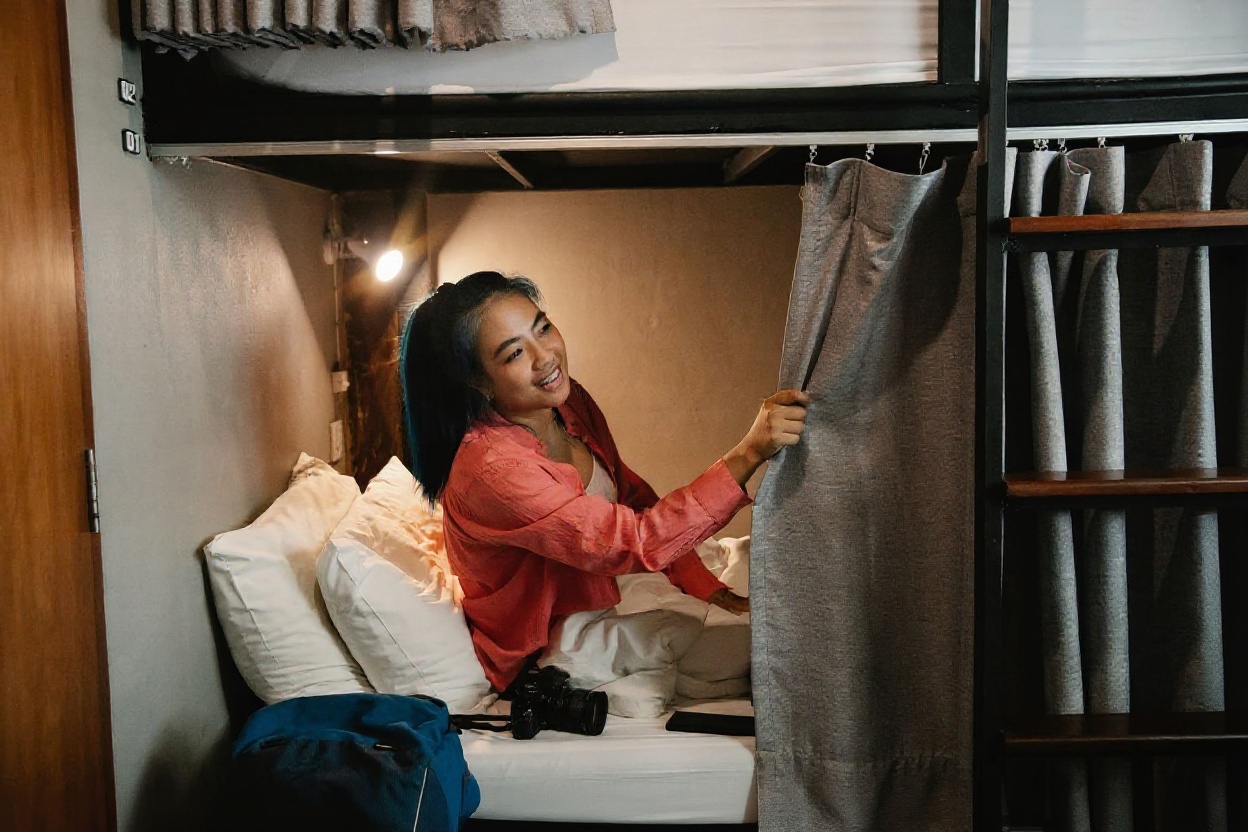
Vietnam still has dorm beds. That’s not nothing. In Hanoi, Hue, and Hoi An you can find 6–8 bed dorms for 100,000–150,000 VND (~$4–6). The beds are real, the AC works, and most places have decent wifi.
What you’re giving up: privacy, quiet after 11pm, and the ability to leave your bag unlocked. The 6-bed dorm with strangers at 3am in Hanoi’s Old Quarter is a specific kind of travel experience.
Step up to 180,000–300,000 VND (~$7–12) and you get a private room with a window. That’s the sweet spot for most backpackers after the first few nights of dorm life.
ℹKnow Before You Go
Phu Quoc and Da Nang have inflated accommodation costs compared to the rest of Vietnam. Budget hostels that would cost $5–6 in Hanoi run $10–15 there. Factor this into your city-by-city planning.
Food: The Street vs. Restaurant Decision
This is where Vietnam backpacking either works or doesn’t. The math is simple: a bowl of phở (say: fuh) from a street stall costs 30,000–50,000 VND (~$1.15–2). The same bowl at a tourist-facing restaurant costs 80,000–120,000 VND (~$3–5). Over a week, you’re talking about a $40–60 difference from this one decision alone.
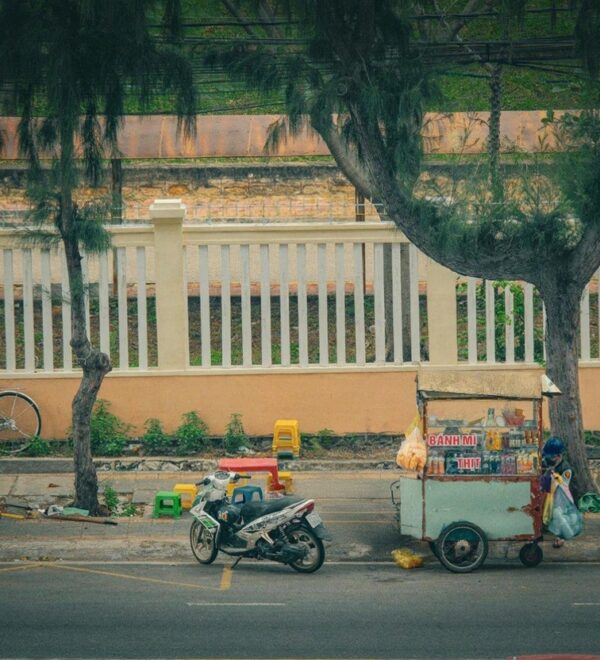
The street food isn’t inferior. It’s often better. The broth has been simmering since 5am. The cook has been making the same dish for twenty years. The plastic stool situation is part of it.
Budget breakdown that works: plastic-stool breakfast (30,000–40,000 VND), street lunch (40,000–60,000 VND), slightly more considered dinner (60,000–100,000 VND). Daily food budget: 130,000–200,000 VND (~$5–8).
Add one beer at a bia hơi (say: bee-ah huh) — draft beer for 10,000–15,000 VND (~$0.40–0.60) — and you’re still under $9.
⚠Real Talk
Cooking classes, wine at rooftop bars, and anything described as “fine dining” will blow your food budget for a week in one night. That’s fine — just plan for it rather than discovering it mid-trip.
Getting Between Cities: Overnight Moves Save Money
This is the backpacker budget hack that actually works. A sleeper bus from Hanoi to Hue costs 250,000–350,000 VND (~$10–13) and takes 12–14 hours overnight. You arrive in Hue in the morning, having spent the night traveling instead of in a hostel. One bus ticket = transport + accommodation combined.
The overnight train does the same math. Hanoi to Da Nang in a 6-person soft sleeper runs around 350,000–500,000 VND (~$13–19) and gets you there by morning. For the full picture on this, see our Vietnam night train guide.
The sleeper bus gets a mixed reputation for comfort. It’s fine. The beds are narrow, the AC runs cold, someone always snores. It’s a bus, not a hotel. If that bothers you, budget for the train.
City-by-City Cost Map: Where Vietnam Is Cheapest
✓Quick Answer
Cheapest to most expensive for backpackers: Hue → Hanoi → Hoi An → Da Nang → Nha Trang → Phu Quoc. The south generally runs 20–30% more expensive than the north for equivalent accommodation and food.
Hanoi ($20–28/day)
Still one of the best-value cities in Southeast Asia for a backpacker. Old Quarter dorms run 100,000–150,000 VND. Street food is everywhere and genuinely excellent. The city is walkable enough that you can skip transport on most days. The main budget leak is drinking — the Old Quarter bar scene is designed to extract money from backpackers efficiently.
Hue ($18–25/day)
The cheapest major stop on the classic backpacker route. Dorms are slightly cheaper than Hanoi. The city is small enough to bicycle everywhere (30,000–50,000 VND/day rental). Entry fees for the imperial sites add up if you try to see everything, but the exterior walking is free. Most travelers spend 2 nights and spend very little.
Hoi An ($22–30/day)
Hoi An has a reputation for being expensive, and it’s not exactly wrong — the Ancient Town restaurants are tourist-priced, and the tailors will test your willpower. But accommodation is still reasonable outside the town center, and eating at the covered markets keeps food costs in check. Budget leaks: cooking classes, tailor trips, bicycle rides to An Bang Beach.
Da Nang ($28–40/day)
Da Nang is genuinely more expensive than its neighbors. It’s a city built for domestic Korean package tourists, neither of whom are price-sensitive. Accommodation is the main pain point — the same money that gets you a private room in Hue gets you a dorm bed in Da Nang. Eat at Bà Dương market for local prices. Our Da Nang things to do guide has the free and low-cost activities.
Phu Quoc ($35–55/day)
Budget Phu Quoc is an optimistic concept. The island has been aggressively developed for resort tourism and the accommodation floor has risen accordingly. You can still find cheap guesthouses in Duong Dong town for 200,000–300,000 VND (~$8–12) for a basic private room, but the beach area is expensive. Most shoestring travelers skip Phu Quoc entirely.
The Hidden Costs That Blow Budgets
The Ha Long Bay Problem
Every budget itinerary includes Ha Long Bay. Almost every Ha Long Bay option costs $80–150 for a 2-night cruise. You can’t do Ha Long Bay for $20. The budget operators that undercut that number are running vessels that fail safety inspections and serve food that will make you sick. I know because I tried one in 2022.
The honest approach: budget $100–130 for a 2-night cruise on a reputable boat, accept that this is an outlier cost in an otherwise cheap trip, and stop trying to find a $30 alternative. Our budget Ha Long Bay guide has the breakdown on what you’re actually trading off at each price point.
The Visa Cost
Vietnam e-visa is $25 USD, single entry, 90 days. This is a fixed cost you pay before you arrive. Don’t forget to budget it into your pre-trip total — it throws off a lot of “daily cost” calculations when people realize they spent $25 before they even landed.
ATM Fees
Vietnam ATMs charge withdrawal fees. Vietcombank charges a fixed 30,000 VND (~$1.15) per transaction. BIDV charges a percentage, which is worse. Draw larger amounts less frequently. For the full breakdown, see our Vietnam ATM fees guide.
The Micro-Transaction Friction
The “entrance fee” at a temple that didn’t used to have one. The xe ôm (say: say-ohm — motorbike taxi) driver who waits outside your hotel and expects 100,000 VND for the return. The restaurant that charges 10,000 VND for rice service. None of these are technically scams. They are the friction cost of tourist infrastructure, and budgeting 50,000–100,000 VND/day in miscellaneous micro-transactions is the realistic way to handle it.
↗Insider Tip
Always confirm the price before getting in a taxi or xe ôm. “How much to X?” in Vietnamese is “đi X bao nhiêu tiền?” (say: dee X bow nyew tee-en). The act of asking changes the dynamic entirely.
Where to Save and Where to Spend
Not every dollar in Vietnam is created equal. Some savings cost you nothing. Others cost you the trip.
Save without regret: Airport transfers (use the public bus or grab), private tours (go with a group or DIY), bottled water (bring a filter bottle — Vietnam has cheap refill stations), and any accommodation upgrade beyond “clean bed, working AC, hot shower.” You’re not at the hotel enough to justify premium rates.
Spend without guilt: The Ha Long Bay cruise. One good Hoi An restaurant meal. The Ha Giang Loop permit if you’re doing it. A reputable motorbike rental from a shop with actual insurance. Travel insurance — yes, this is a spend column item. Getting hurt on a motorbike in Vietnam without insurance is a financial event, not just a physical one. See our Vietnam travel insurance guide for what policies to actually buy.
The trap category: Anything sold loudly outside a tourist site. Motorbike taxis who approach you first. Restaurants with menus in seven languages and photos of every dish. These aren’t evil — they’re just inefficient uses of your budget that deliver less than the alternatives two streets over.
Jake’s Confession: The Budget Week That Wasn’t
In 2021, three weeks after landing in Hanoi, I decided to track every đồng for a week to see if I could really do $15/day. I almost could. I ate one real meal a day, skipped every activity with an entrance fee, walked everywhere in 35-degree heat, and survived mostly on bánh mì (say: bahn mee) and iced coffee. Final average: $17.40/day.
By day five I was tired, sweaty, and had turned down two invitations to join people on day trips because they didn’t fit the budget. That’s when I realized the $15/day goal had become the point of the trip instead of Vietnam being the point. Budget constraints are useful. Budget obsession is its own kind of travel failure.
The number I came back to: $28/day feels good in Vietnam. You’re not reckless, you’re not suffering, and when something interesting comes up, you say yes instead of calculating whether you can afford it.
Sample Budget Breakdown — 2 Weeks in Vietnam
The “low” total assumes dorm beds every night, all street food, and the cheapest Ha Long option that isn’t actively dangerous. The “realistic” total is what most experienced backpackers actually spend, including a couple of restaurant meals and the freedom to say yes to things.
For the full picture on daily costs broken down by spending category, see our Vietnam daily budget guide.
How to Make Your Budget Go Further
Timing: Travel in Low Season
Low-season accommodation in Vietnam can be 20–40% cheaper than peak. The tradeoff is weather. Hoi An floods in October–November. Hanoi in January is genuinely cold. But if you’re flexible, the savings are real and the tourist crowds thin out dramatically. Our Vietnam best time to visit guide has the full seasonal breakdown.
Eat Where Locals Eat, Not Where Signs Are in English
The single strongest correlation in Vietnam: English on the sign = tourist pricing. Not always, but often enough to use as a filter. A phở shop with a handwritten sign in Vietnamese and three old men drinking tea outside is going to be cheaper and better than the “Authentic Pho” place with the laminated photo menu.
Use the Bus, Not the Private Transfer
Every hotel and hostel offers “private transfers” to the airport, the caves, the day trip. They’re always more expensive than the public option. Hanoi to Noi Bai Airport: the public bus 86 runs 45,000 VND (~$1.75). The hotel private car runs 200,000–350,000 VND (~$8–13). It takes the same time. For full transport info, see our getting around Vietnam guide.
Walk More Than You Think You Should
Hanoi’s Old Quarter, Hoi An Ancient Town, Hue’s riverside — all walkable. The instinct to grab a Grab or an xe ôm for a 1.5km trip is expensive by Vietnamese standards. A 1km Grab ride costs 15,000–25,000 VND (~$0.60–1). Do that ten times a day and you’ve added $6–10 to your daily total without noticing.
Get a Good SIM Card on Day One
Paying for WiFi at cafés, buying individual hotspot access, or relying on hostel internet is both slower and more expensive than a Vietnamese SIM. Viettel or Vietnamobile prepaid SIMs cost 100,000–150,000 VND (~$4–6) for 30 days of data and calls — more than enough. Pick one up at Noi Bai or Tan Son Nhat airport on arrival. Don’t pay the airport premium: the same SIM in the city runs about 30% cheaper, but the airport convenience is usually worth the difference on your first day. For a full comparison of which carrier to pick, see our Vietnam SIM card guide.
Learn How to Bargain (and When Not To)
Markets, souvenirs, and tourist-facing street stalls: bargaining expected, usually 30–50% below asking price. Restaurants with menus, supermarkets, convenience stores, and anything with a price tag: fixed price, bargaining offensive. The rule is simple — if there’s no price displayed, negotiate. If there is a price displayed, pay it. Getting this wrong in either direction costs you money or goodwill, both of which matter on a long trip. For the full negotiation playbook, see our Vietnam haggling guide.
Backpacker Routes by Budget: Three Itinerary Scenarios
Different budgets unlock different versions of Vietnam. Here’s how the same two-week trip looks at three spend levels.
The True Shoestring Route — $15–20/day
Hanoi (4 nights, dorm, street food only) → Ninh Binh day trip by local bus → Hanoi to Hue overnight bus → Hue by bicycle (2 nights) → Hue to Da Nang local bus, Da Nang to Hoi An taxi share → Hoi An (3 nights, market eating only). Total transport: around $35. Total accommodation: $60–80. Ha Long Bay skipped or saved for a separate budget moment.
What you miss: Ha Long Bay, the train experience, restaurant meals, any guided activity. What you get: Vietnamese Vietnam, the kind where you have to figure things out because you can’t afford the tourist shortcuts.
The Comfortable Backpacker Route — $25–35/day
This is the version most people end up running. Hanoi (3 nights, small private room) → Ha Long Bay 2-night cruise ($110–130) → Ninh Binh by limousine van → overnight train to Da Nang → Hoi An (3 nights, one Ancient Town dinner) → Hue (2 nights). Ha Giang Loop or Sapa added if you have 10+ days. Total cost for 14 days: roughly $450–520 excluding flights.
The Flashpacker Floor — $45–60/day
Private rooms everywhere, one restaurant meal per day, private transfers at airports, better Ha Long cruise ($150–180), one or two guided day trips. Still not “luxury” travel, but significantly more comfortable and less decision-heavy. You stop thinking about every transaction. Most travelers who describe themselves as backpackers land here by accident once they’ve been traveling for a few weeks and their tolerance for discomfort has calibrated.
→Who It’s For
The $15/day budget is for travelers who genuinely enjoy the constraints and see budget management as part of the adventure. The $28–35/day budget is for everyone else who wants to travel affordably without making money the central narrative of the trip.
Frequently Asked Questions
Is Vietnam still a cheap backpacker destination in 2026?
Yes, by global standards. Prices have risen compared to pre-COVID (roughly 20–30% in major tourist cities), but $25–35/day for a genuine backpacker experience still puts Vietnam among the most affordable destinations in the world for Western travelers. Southeast Asia overall has gotten more expensive — Vietnam just started from a lower base.
What’s the cheapest city in Vietnam for backpackers?
Hue is consistently the cheapest major stop: smaller tourist infrastructure, lower accommodation costs, and a local food scene that hasn’t been priced up for foreigners. Hanoi is a close second. Both are notably cheaper than Hoi An, Da Nang, or any beach destination in the south.
Can I backpack Vietnam for $15/day?
Technically yes. Practically, it means eating two street food meals a day, sleeping in the cheapest available dorm, taking no day trips, drinking nothing but water and coffee, and saying no to most things you came to Vietnam to do. Some travelers manage it for a few weeks. Most adjust upward within five days.
How much spending money do I need for 2 weeks in Vietnam?
Budget $400–550 excluding international flights for a realistic 2-week backpacker trip. That includes a Ha Long Bay cruise, accommodation, food, transport, SIM card, and visa. If you want more flexibility or plan to do any dive trips, cooking classes, or motorbike day trips, budget $600–700.
What should I budget for the Ha Long Bay cruise?
$100–130 for a 2-night cruise on a reputable boat. Budget below $80 and you’re in territory where the boat condition and food quality have been cut to make the price work. The overnight cruise isn’t something worth scrimping on — it’s one of the main reasons people come to northern Vietnam.
Is Vietnam cheaper than Thailand for backpackers?
Vietnam is generally cheaper than Thailand by 15–25% for equivalent travel. Street food is cheaper, dorm beds are cheaper, and domestic transport is cheaper. The main exception is Ha Long Bay — there’s no Thai equivalent that costs as much. For a side-by-side breakdown, see our Vietnam vs Thailand guide.
FAQ
How much does backpacking Vietnam cost per day?
Budget travelers spending carefully: $20–30/day. This covers a hostel dorm (100,000–200,000 VND), street food meals (50,000–100,000 VND per meal), local transport, and one or two paid attractions. Mid-range with private rooms and occasional restaurant meals: $40–60/day. Ha Long Bay cruise and Ha Giang Loop add single-day spikes of $50–150.
What is the cheapest way to travel between cities in Vietnam?
Sleeper buses are cheapest — Hanoi to Hue around 250,000–350,000 VND, Hue to Hoi An around 150,000 VND. Train is slightly more but more comfortable and scenic. Flying is worth considering for long distances (Hanoi to Saigon): budget airlines like VietJet and Bamboo run promotions from 400,000–800,000 VND if booked early.
Which cities in Vietnam are cheapest for backpackers?
Hoi An and Hue are cheapest for accommodation — hostels from 80,000–130,000 VND/night. Hanoi has a wide range but budget options cluster around the Old Quarter. Saigon is slightly more expensive. Da Lat and Ninh Binh offer good value. The most expensive: Phu Quoc and resort-heavy beach towns.
Is Vietnam a good destination for solo backpackers?
One of the best. The north-south route (Hanoi → Hue → Hoi An → Saigon) is very well-established, hostels are social, transport connections are frequent, and solo travel is extremely common. The backpacker circuit means you’ll meet other travelers constantly if you want company. Safety concerns for solo travelers are low.
How many days do you need to backpack Vietnam?
Two weeks covers the main north-south route at a reasonable pace: 3 nights Hanoi, 2 nights Ninh Binh, 2 nights Hue, 3 nights Hoi An, 2 nights Saigon. Three weeks lets you add Ha Giang Loop or a beach extension. Four weeks gets you to the Mekong Delta, Con Dao, or slower travel through central Vietnam.